There is a quiet revolution taking place in the world of digital marketing. Song Xing put forward a point of view that has the entire industry discussing in a recent course:For the first time, digital marketing will target the preferences of AI, not just people.
People who have done global expansion marketing should be able to feel the weight of this sentence.
Imagine a scenario: your target customer opens ChatGPT and enters "Recommend a cross-border e-commerce tool suitable for small and medium-sized enterprises". The AI makes three recommendations - your brand is not one of them. what does that mean? It means that you have never existed in this user's decision-making link.
This is what GEO (Generative Engine Optimization) solves. This article will systematically explain what GEO is, what is the difference between it and traditional SEO, why global expansion companies must start their layout now, and how to do it specifically. If you are thinking about brand growth strategies in the AI era, this article is worth your 10 minutes to read.
From SEO to GEO: How digital marketing is changing
Looking back at the evolution of digital marketing over the past decade or so, there is a clear timeline:
- 2010-2020: In the era of private domain traffic, WeChat ecosystem, mailing lists, and CRM are the core
- 2020-2023: In the era of streaming, Facebook Ads, Google Ads, and TikTok Ads have become growth engines
- 2023-2025: In the era of global marketing, product-effect integration and multi-channel collaboration have become a consensus
- 2025 to present: In the GEO era, AI search reconstructs traffic distribution, and brands must market to both people and AI.
The cycle time for each transition is shortening. It has been done in the private domain for ten years, in the streaming industry for five years, and in the global domain for three years. The window period for GEO may only be one to two years.
AI is becoming the new middle layer between users and brands
Several signals are worth paying attention to:
Alibaba established ATH business group. By the end of 2025, Alibaba will integrate AI, Taotian, and overseas e-commerce into one business group. What's the logic behind this? Token economy. When AI becomes the main "user" consuming information, the platform's traffic distribution logic will change from "people looking for goods" to "AI recommending goods." This is not the judgment of Alibaba, but the consensus of the entire industry.
DeepSeek V4 introduces long-term memory (LTM). This is an easily overlooked but significant technological breakthrough. In the past, AI started every conversation from scratch, without remembering who you were or what products you used. But with long-term memory, AI will "remember" user preferences, historical interactions, and even brand impressions. what does that mean?If your brand leaves a positive impression in the AI's memory, it will continue to favor you in future recommendations. On the other hand, if the AI has no knowledge of your brand, you will never appear on the recommendation list.
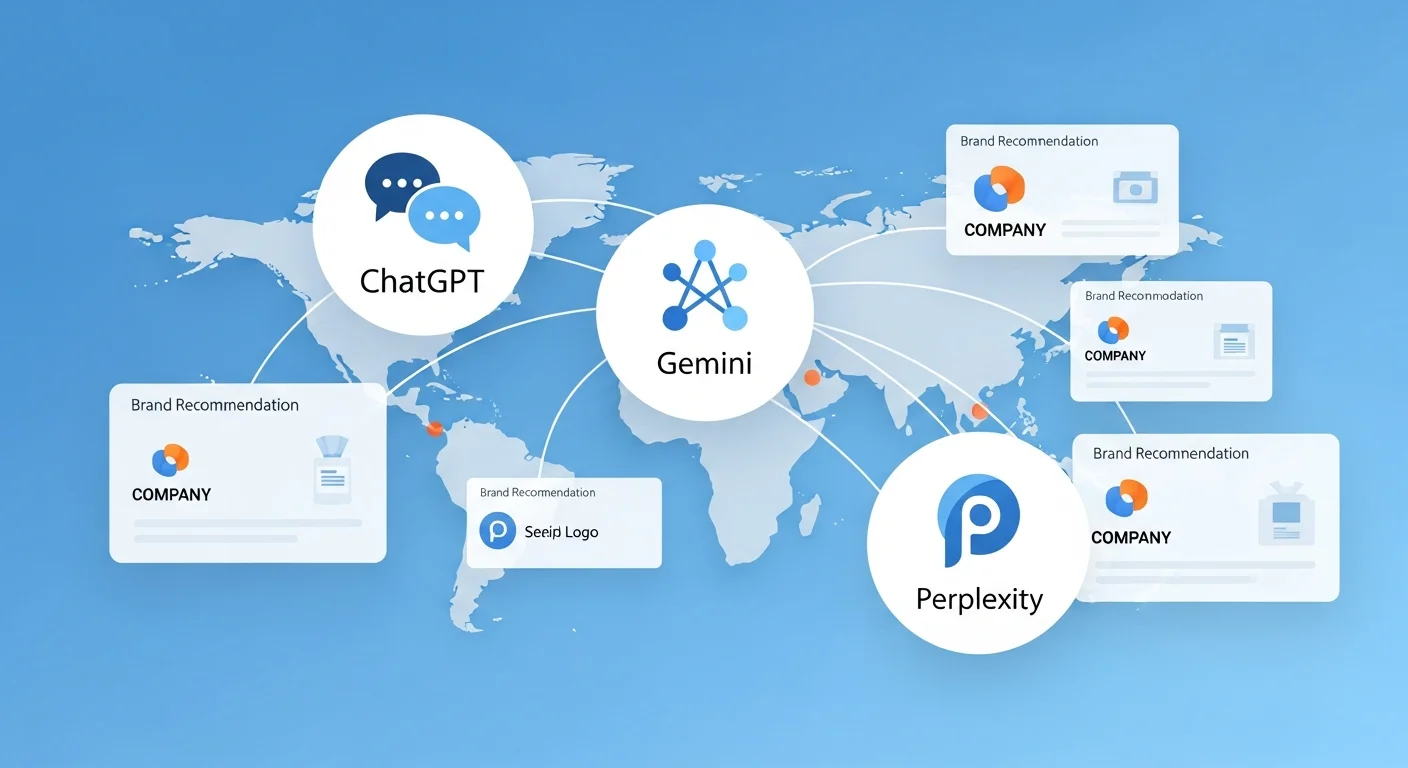
Traditional traffic entrances are being diverted by AI. More and more users no longer open a Google search, but directly ask ChatGPT, Gemini or Perplexity. This is not a prediction, it is a fact that is happening.
These three signals point to the same conclusion:AI is becoming the new middle layer between users and brands. It used to be that you needed a spot on the first page of Google search results. Now, you also need to take a seat in the AI's answer.
What is the difference between GEO and SEO?
Many people's first reaction is: Isn't GEO just the AI version of SEO?
No. The underlying logic of the two is completely different.
The core of SEO is to optimize for search engine crawlers, with the goal of obtaining a higher ranking on the search results page (SERP). Users search for keywords, see your link, and click to enter your website. The whole process is "search → ranking → click → browse".
The core of Generative Engine Optimization (GEO) is to optimize for AI large models, with the goal of being cited and recommended by AI. Users ask questions to AI, and AI extracts answers from massive amounts of information and presents them directly. The whole process is "ask → AI answer → direct action". Users may not click on any links at all.
| Dimensions | SEO | GEO |
|---|---|---|
| Optimization object | Search engine crawlers (Googlebot, etc.) | AI large models (GPT, Gemini, Claude, etc.) |
| core goals | Top search results | Cited and recommended by AI |
| Ranking mechanism | Based on link weight, page quality, user behavior | Based on content authority, knowledge map, and citation signals |
| Content form | Keyword optimization, structured pages | Authoritative content, factual statements, quotable passages |
| Evaluation indicators | Ranking, traffic, click-through rate | AI citation rate, brand mention frequency, recommendation probability |
| User path | Search → Click → Browse website | Ask a question → AI answer → take direct action |
| competitive focus | Compete for position on the search results page | Compete for the qualification to be "selected by AI" |
The key differences are:SEO competes for position, while GEO competes for "being selected by AI".
This doesn't mean SEO isn't important anymore. Quite the opposite, SEO remains the foundation for getting organic traffic. But if you only do SEO but not GEO, you will miss a traffic entrance that is growing rapidly. The two should be in a dual-track, parallel relationship - SEO servicesLay a good foundation,GEO optimizationSeize the opportunity.
AI search is reshaping user behavior
This is not a "possible future" trend, but a "happening" reality.
According to our data observations from serving 500+ global expansion companies, the traffic proportion of AI search has increased from about 5% in 2024 to about 12% in early 2026.Gartner predictions, traditional search traffic will drop by 25% by the end of 2026, and a considerable part of it will be transferred to AI search. For some customers in the B2B SaaS industry, the proportion of traffic brought by AI search even exceeds 20%. This growth rate is exponential.
A fundamental shift in user behavior
The user path for traditional search is:Search keywords → Browse search results → Click multiple links → Compare information → Make decisions. This process may take 30 minutes or more.
The user path for AI search is:Ask questions → AI directly gives answers and recommendations → Users take direct action. The entire process may only take 2 minutes.
What does this mean?Users' decision-making links have been greatly compressed, and AI has become a key information filter. If AI doesn't recommend you, users may not even know you exist.
Impact on global expansion companies
For global expansion companies, this change is particularly worthy of vigilance.
In the past, you could reach overseas users through Google Ads placement, SEO optimization, social media operations, etc. These channels are still effective, but a new channel is emerging - AI search. When overseas users ask ChatGPT "recommend a good CRM for small businesses" or Gemini "best cross-border e-commerce platforms", is your brand included in the answer?
It's worth noting that AI doesn't always give accurate information. According to Vectara's Illusion Ranking, the hallucination rate of mainstream large models is generally between 3% and 15%, and DeepSeek is about 14. 3%. This means that AI sometimes "fabricates" information. But this just illustrates a problem:The quality of information sources for AI is crucial. If your brand has a strong presence in high-quality, authoritative content sources, AI is more likely to accurately quote and recommend you rather than "making up" information about you.
How far can Nordlander's human wave tactics go?
Look at the case of Notland. This brand has achieved astonishing growth in the domestic market by relying on tens of thousands of experts to promote products and massive short video distribution. However, this model that relies purely on human tactics will face a fundamental challenge in the era of AI search:AI does not look at short videos, AI looks at structured, authoritative, and quotable content.
When users no longer discover brands through short videos, but ask AI for recommendations, brands that have no presence in authoritative content sources will gradually disappear from users' vision. This is not to say that short videos and influencer marketing are unimportant;This alone is no longer enough.
GEO's core strategy: Let AI proactively recommend your brand
Having said so much "why", let's talk about "how".
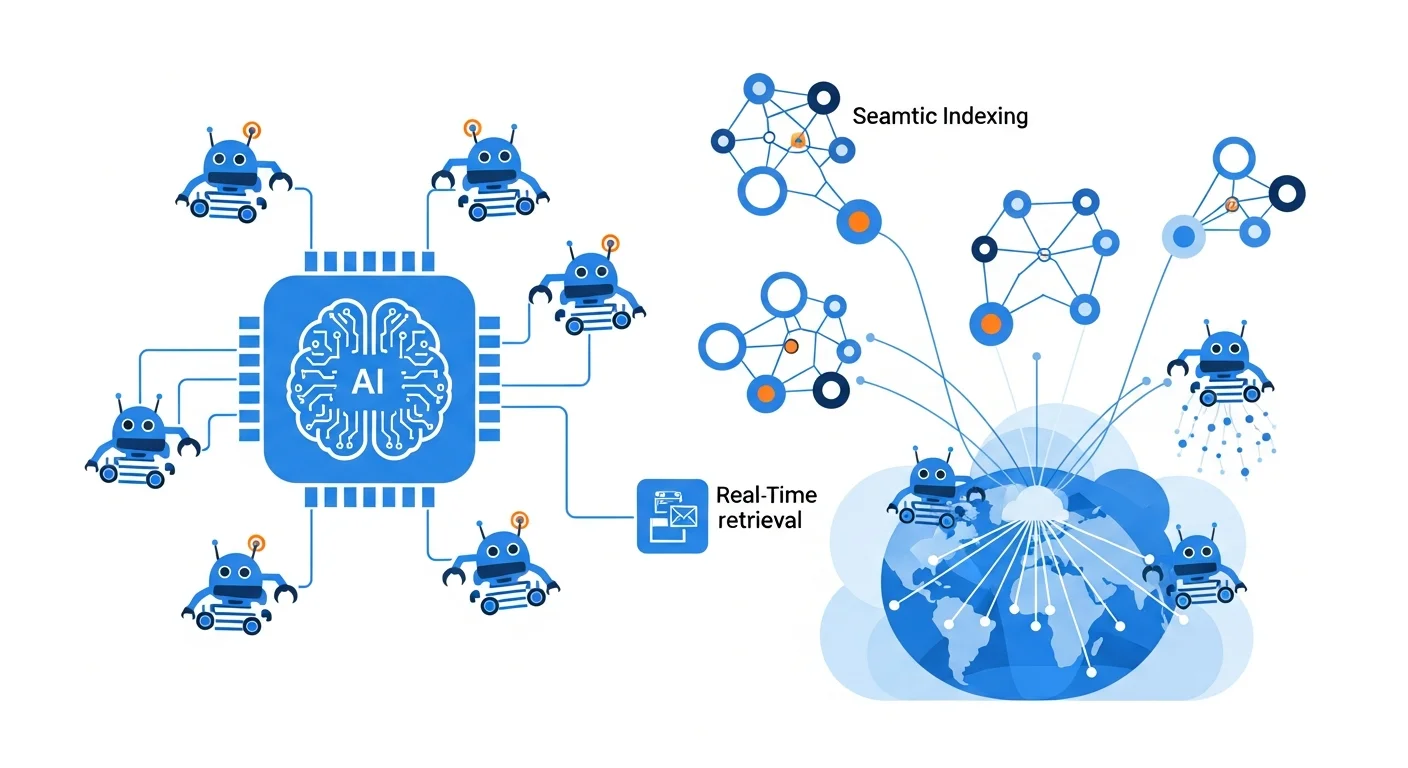
Generative engine optimization is not a metaphysics. When a user asks ChatGPT "Recommend a cross-border e-commerce tool," the AI extracts the answer from its training data and real-time retrieval. Your job is to make your brand part of that answer.
1. Authoritative content construction: Establish brand knowledge nodes on high-authority platforms
The training data for large AI models comes from public content on the Internet. According to Princeton University GEO Research, In generative engine optimization, the authority and citability of content are key factors affecting AI recommendations. Not all content is treated equally – content from high-authority platforms is given significantly more weight.
Specifically:
- Create brand entries on knowledge platforms such as Wikipedia and Crunchbase
- Published or reported in authoritative industry media (TechCrunch, Search Engine Journal, 36Kr, etc.)
- Accumulate real reviews on review platforms such as G2, Capterra, and Trustpilot
- Establish technical influence in technical communities such as GitHub, Stack Overflow, etc. (applicable to SaaS/technical products)
Key principles:Instead of talking to yourself on your own website, build your brand presence on a platform that AI trusts.
2. Knowledge graph optimization: Let the brand become part of the AI training data
The way AI understands the world is through knowledge graphs - networks of relationships between entities. Your brand needs to be a node in this network and be associated with the right entities.
- Ensure brands have accurate entity information in Google Knowledge Graph
- Mark the relationship between brands, products, and services in Schema. org structured data
- Keep brand messaging consistent across multiple authoritative sources (name, description, categories)
- Establish semantic associations between brands and industry keywords
3. Structured content: content formats that are easier for AI to extract and quote
When AI generates answers, it tends to cite content that has a clear structure, clear facts, and is easy to extract.
- FAQ format: Directly answer questions users may ask AI
- definition paragraph: Define concepts in concise language ("X is a...")
- Lists and comparisons: AI likes to quote structured comparative information
- Data and Statistics: Statements with specific numbers are more likely to be cited
- Authoritative citation: Quote industry reports and official data to increase the credibility of the content
4. Citation signal strengthening: The more cited by authoritative sources, the higher the probability of AI recommendation.
This is similar to the external link logic in SEO, but has a wider dimension. The AI looks not just at links, but at how often and how well a brand is mentioned and cited across the internet.
- Obtain coverage and citations from industry media
- Participate in industry research reports and become one of the data sources
- Build brand buzz on social media
- Build content partnerships with industry KOLs and experts
5. SEO + GEO dual-track parallelism: simultaneous optimization of traditional search and AI search
GEO is not a replacement for SEO, but a complement. The smartest strategy is to advance both simultaneously:
- SEO ensures you have steady organic traffic in Google searches
- GEO ensures you have brand exposure and recommendations in AI searches
- The content assets accumulated by SEO (high-quality articles, external links, brand weight) are also the foundation of GEO
- Brand mentions and citations generated by GEO in turn improve SEO performance
This is what we always emphasize at SeaSeekProduct and effect in oneConcept - in the short term, you can get results by putting in, and in the long term, you can rely on SEO + GEO to accumulate brand assets.
A real GEO case
No matter how much theory we talk, it's better to look at a real case.
We serve a B2B SaaS company whose product is a project management tool for overseas small and medium-sized enterprises. Before starting GEO optimization, the brand was almost non-existent in AI searches - when a user asked ChatGPT "recommend a project management tool for small teams", the brand was completely absent from the answer.
what we did
Phase 1 (Months 1-2): Infrastructure
- Establish a complete product profile on G2, Capterra and other platforms, and accumulate real user reviews
- Optimize your brand's Wikipedia entries and Crunchbase information
- Create structured product comparison pages and FAQ content on the official website
- Ensure brand messaging is consistent across all platforms
Phase 2 (Months 3-4): Content Offensive
- Publish guest articles on authoritative platforms such as Search Engine Journal and HubSpot Blog
- Produce industry research reports and provide original, citable data
- Build brand discussion in communities such as Reddit and Quora
- Continuously produce high-quality SEO content covering target keyword clusters
Phase Three (Months 5-6): Citation Signal Amplification
- Obtain industry media coverage
- Cooperation content with industry KOL
- Build influence in the technology community
- Continuously monitor changes in AI citation rates
result
After 6 months of generative engine optimization, the brand was recommended in ChatGPT related questions 80%. That is, when users ask ChatGPT to recommend a project management tool, this brand is mentioned 8 out of 10 times.
During the same period, the brand's organic search traffic grew by 150%, and traffic from AI searches grew from near zero to 18% of total traffic.
This is not magic, it is the result of systematic GEO strategy execution.
5 things global expansion companies should do now
If you agree on the importance of GEO but are not sure where to start, here is our suggested list of priority actions:
1. Audit your brand's visibility in AI search
Open ChatGPT, Gemini, Perplexity, and test them with questions your target customers will ask. For example:
- "Recommend a [your product category]"
- "How about [your brand name]"
- "What are the best [product types] in [your industry]"
Record whether the AI mentioned your brand, what it said when it did, and whether it was accurate. This is your GEO baseline.
2. Build brand content assets on authoritative platforms
Priority from high to low:
- Google Business Profile / Knowledge Panel complete information
- Evaluation platforms such as G2, Capterra, Trustpilot (especially important for B2B/SaaS)
- Knowledge platforms such as Wikipedia and Crunchbase
- Reports or guest articles from authoritative industry media
3. Optimize the content structure to make it easier for AI to extract
Review your existing website content:
- Is there a clear FAQ page?
- Does the product description use a structured format that is easy for AI to understand?
- Are there data and statistics that can be cited?
- Is the content answering questions that users would actually ask the AI?
4. SEO + GEO dual-track parallelism
Don't give up on SEO because of GEO. The two are complementary:
- Keep investing SEO optimization, ensuring stable natural search traffic
- Incorporate GEO thinking into your SEO content strategy - consider "how will AI cite this content" for each article?
- Utilize content assets accumulated through SEO as the basis for GEO
5. Establish an AI citation rate tracking system
You can't optimize what you don't measure. Establish a tracking mechanism:
- Regularly test brand mentions in mainstream AI platforms
- Track traffic changes brought by AI searches (Identify AI source traffic in GA4)
- Monitor brand accuracy in AI responses (avoiding misinformation due to hallucinations)
- Compare the performance of competing products in AI search
Conclusion: Those who plan early will have the upper hand.
Back to the question at the beginning: When a user asks AI to "recommend a XX", is your brand included in the answer?
If you're not there now, don't worry. GEO is still in its early stages, and most businesses haven't started doing it systematically yet. this means exactlyNow is the best time to lay out.
Just as companies that started doing SEO in 2015 are enjoying huge natural traffic dividends today, companies that started doing generative engine optimization in 2026 will have a first-mover advantage in the AI search wave in the next few years.
The underlying logic of digital marketing is changing. In the past, you just had to market to people. Now, you also need to market to AI. This is not a multiple-choice question, but a required question.
Ready to get started? Book an Appointment for a Free GEO Strategy Diagnosis, let us help you evaluate the current situation of your brand in AI search and develop an exclusive GEO optimization plan.
This article was originally published by SeaSeek (SeaSeek AI). As a Google Premier Partner and AI-native full-link overseas marketing expert, we help 500+ global expansion companies achieve growth that combines product and performance. For more GEO insights, visit GEO Insight Column.