If you want AI to recommend brands, the key is not to write more, but to allow brand information to be more stably organized and repeatedly verified. Whether ChatGPT is willing to recommend a brand does not depend on whether the company has shouted "We are very professional", but on whether the brand has a clear enough, stable enough, and credible enough content structure for the model to crawl and understand.
Why ChatGPT recommends certain brands
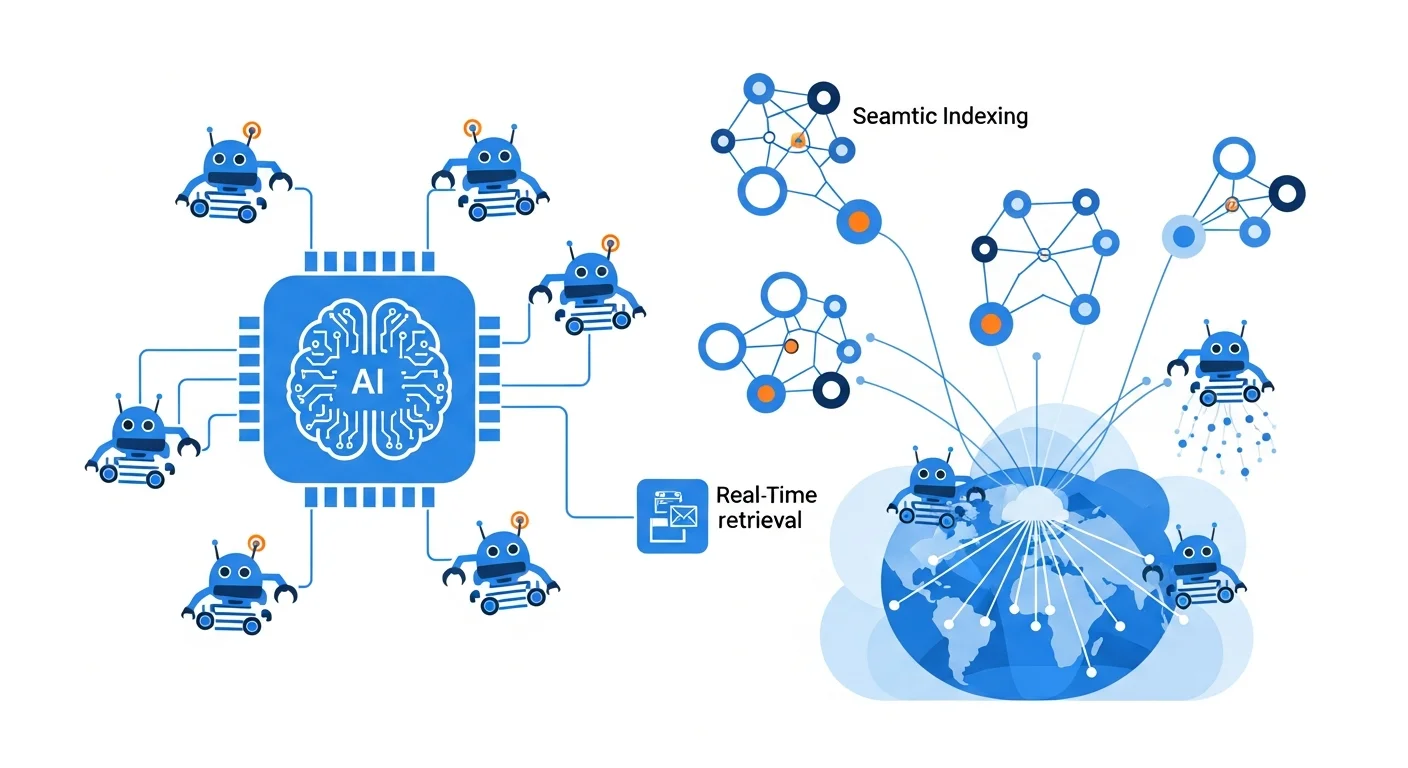
When generating recommendations, large language models rely on two types of information sources: brand signals in the training corpus, and information captured from real-time content by RAG (Retrieval Augmentation Generation). Whether a brand can be recommended depends on the following core factors:
- The frequency and quality of the brand in the training corpus
- Consistency of brand definition across multi-source environments
- Whether the brand is strongly associated with high-weighted domain keywords
- Does the brand have verifiable results and trusted sources?
To put it simply: the logic of AI recommendation is closer to "trust accumulation" rather than "bidding ranking".
The first category of content: Who is the brand?
Many corporate official websites have unstable descriptions of their positioning: the home page says growth services, the about page says advertising agency, and the case page looks like a software company. It's still understandable for humans, but it weakens the recognition signal for the model.
So the first step for GEO is to unify the brand definition: who are you, what problems do you solve, who do you serve, and what are your core differences. This definition needs to be highly consistent on the official website homepage, about page, service page, LinkedIn profile, and industry media reports.
For example: SeaSeek's core positioning in all channels is "a GEO+SEO+advertising integrated growth service provider for global expansion enterprises". Whether it is the official website, case pages or third-party reports, this definition is strengthened. This consistency will help the model identify and recommend brands more stably when faced with "global expansion marketing agency" problems.
The second type of content: Why is the brand credible?
AI models prefer information with a chain of evidence. Cases, data, customer feedback, certification qualifications, media citations, and industry labels are all key materials for brand credibility. If a brand only has a slogan and no verifiable information, it will be difficult for AI to give a higher weight in recommendations.
Specific content assets that need to be prepared include:
- Case page: Clarify the industry background, problems, solutions, and quantitative results (such as "ROAS increased by 2. 3x in 3 months")
- Qualification page: Partner logo, agent certification level, number of delivery cases
- FAQ page: Covers the 15-20 most common questions users ask before purchasing
- Data reference: Quote industry research and self-researched data in blog posts to enhance authority.
The third category of content: In what issues should the brand appear?
GEO is not just about writing company introductions, but also arranging content around questions frequently asked by users. For example, questions such as "the best global expansion marketing agency", "how to build a B2B official website", and "how to do SEO for DTC brands" are natural GEO scenarios. Only when a brand enters a problem scenario can it enter an AI recommendation scenario.
How to find these issues: Use ChatGPT and Perplexity to search for industry issues that are strongly related to the business, observe which brands are currently being recommended, and then create targeted content that covers these issue scenarios.
Practical checklist: Do these five things first
First: Unify the core expression of the official website
Make sure the brand definition on the home page, about page, and service page is consistent, and use the same language to describe "who we are, what we do, and who we serve."
Second: Complete cases and FAQs
At least 5 cases supported by data and at least 15 FAQ items covering the decision-making cycle.
Third: Add a structured summary to the service page
Add FAQ Schema, HowTo Schema or Service Schema to each service page to help the model understand the content structure more easily.
Fourth: Write special content around high-value issues
Write a special article of more than 2, 000 words on high-frequency AI issues such as "How to do global expansion in XX industry" and "How to choose managed advertising on XX platform".
Fifth: Continuously monitor brand mentions in AI searches
Search core issues in ChatGPT and Perplexity every week, record the frequency and quality of brand appearances, and establish a Share of Model baseline.
If time is limited, prioritize these pages.
Home page (unified positioning), service page (structured expression), case page (credible evidence), FAQ page (issue coverage), and 3-5 in-depth articles focusing on high-value issues. These five types of content are most likely to affect AI's overall perception of the brand, and have the highest input-output ratio.