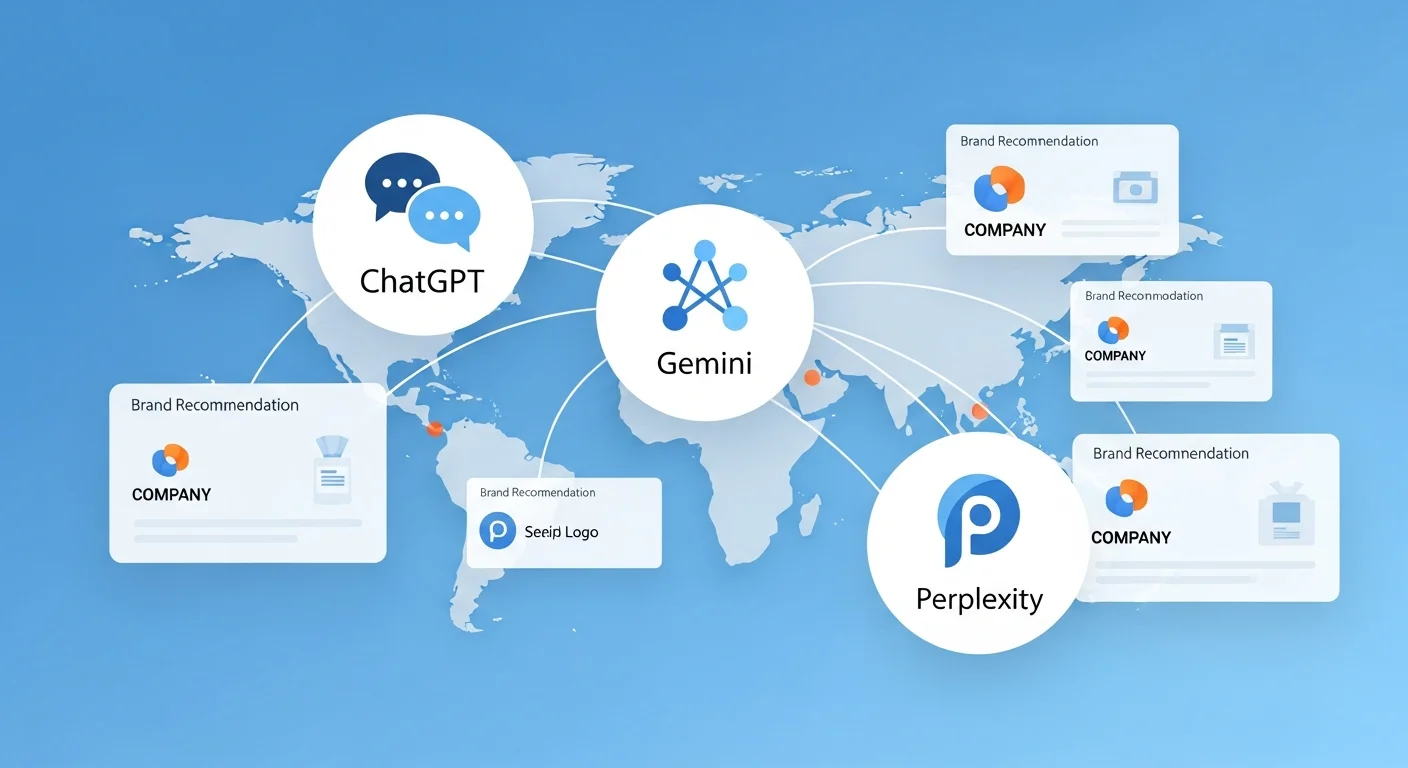
ChatGPT vs Gemini vs Perplexity: AI search engine comparison and brand recommendation logic dismantling
Last month, a SaaS global expansion customer asked us a very typical question: "I search for brand recommendations in ChatGPT, and occasionally see our company, but not at all in Perplexity, and occasionally in Gemini. Comparing the three major AI search engines, why is the difference so big?"
This is not an isolated case. In the process of serving 500+ global expansion companies, we found that more than 80% of brands only focus on ChatGPT when doing GEO (generative engine optimization). However, comparative research on AI search engines shows that the recommendation logic of each platform is completely different - using the same strategy to target three platforms will result in uneven results.
This article will help you figure out three things: what is the brand recommendation logic of ChatGPT, Gemini, and Perplexity, what are the key differences between the three major AI search engines, and how to develop a set of policies that cover multiple platforms. GEO optimization strategy.
The premise of AI search engine comparison: not three shells of the same thing

Many people think that ChatGPT, Gemini, and Perplexity only have different interfaces and similar underlying logic.
This is the biggest misunderstanding when doing AI search engine comparisons.
The underlying models, data sources, citation mechanisms and update frequencies of the three platforms are completely different. If you use the same set of content to "adapt" three platforms, the effect will definitely be uneven.
| Dimensions | ChatGPT | Gemini | Perplexity |
|---|---|---|---|
| underlying model | GPT-4o / GPT-4. 5 | Gemini 2. 0 Flash / Pro | Self-developed model + multi-model hybrid |
| Data source | Training data + Bing search | Google Search Index + Knowledge Graph | Real-time web index + academic database |
| Reference method | Attached source link after answer | Fusion search results with carded citations | Quote source number sentence by sentence |
| update frequency | Search function is real-time, knowledge base lags | Near real-time (powered by Google search) | Real-time (immediate crawling for each query) |
| User portrait | General users, developers, creators | Google ecosystem users, Android users | Researchers, professionals, in-depth users |
Understanding this table is the starting point for developing a multi-platform GEO strategy.
ChatGPT: Training data is heavily weighted, and brand "historical accumulation" is the key
ChatGPT is currently the AI search platform with the largest number of users, with more than 300 million monthly users. Its brand recommendation logic has two levels:
Level 1: Brand awareness in training data
ChatGPT's basic answers mainly rely on information in the training data. If your brand has a large amount of high-quality content in authoritative industry media, professional forums, and Wikipedia-like platforms, you will be included in ChatGPT's "default recognition".
What does this mean? BrandedAccumulation of historical contentThe highest weight on ChatGPT. A brand that has been doing content marketing for 3 years has a much higher probability of appearing in ChatGPT than a new brand that has just started.
Second level: Bing search real-time supplement
ChatGPT's search functionality calls the Bing search API. When a user explicitly asks to "search" or the question involves the latest information, ChatGPT retrieves Bing results in real time and integrates them into the answer.
Zhang Ming is the founder of a cross-border SaaS company. In Q3 of 2025, his brand had almost zero mentions in ChatGPT. The team spent 4 months doing two things: publishing in-depth technical articles in 5 industry media, and optimizing the brand ranking in Bing search. By Q1 2026, ChatGPT will have a 30% chance of mentioning their brand when answering "recommend SaaS tools for [industry]".
ChatGPT GEO optimization focus: - Precipitation of brand content on high-authority media (industry white papers, expert articles, media reports) - Bing search ranking optimization (many businesses ignore this) - Brand knowledge graph construction - let AI "know" you during training
Want to know the complete steps of ChatGPT brand optimization? You can refer to our GEO Optimization Practical 5-Step Guide.
Gemini: An extension of Google's search ecosystem, structured data is the trump card
Gemini is Google's AI search engine and is gradually being integrated into Google Search (AI Overview), Android systems and Google Workspace. Its brand recommendation logic is fundamentally different from ChatGPT.
Core difference: Gemini relies heavily on Google search signals
The better your site ranks in Google Search, the higher the probability of being cited in Gemini. This is no coincidence - Gemini's answer calls directly into Google search index and Knowledge Graph data.
| Google search signals | Impact on Gemini |
|---|---|
| Search ranking Top 3 | Significant increase in citation probability |
| Knowledge graph collection | Directly affects brand recommendation |
| Structured data (Schema) | Help Gemini understand brand attributes |
| E-E-A-T Rating | authoritative direct transmission |
| Google Business Profile | The key to local brand recommendations |
This means,Companies that do well in traditional SEO have a natural advantage on Gemini. But the premise is that your SEO strategy includes structured data and knowledge graph construction - many companies' SEO is still at the stage of "publishing articles and building external links".The collaboration between GEO and SEO is the key.
Gemini GEO optimization focus: - Google search ranking optimization (traditional SEO is the basis) - Schema structured data annotation (Organization, Product, FAQPage) - Google Knowledge Graph included (brand entity construction) - Google Business Profile is perfect (especially important for local businesses) - E-E-A-T signal construction (authority, professionalism, credibility)
Perplexity: real-time indexing + rigorous citation, content "citability" determines everything

Perplexity is the most "academic" AI search engine of the three platforms. Its core features areQuoting sources sentence by sentence - After each sentence, the web page from which the information comes is marked.
This mechanism makes Perplexity's brand recommendation logic completely different from the first two.
Perplexity's reference decision logic:
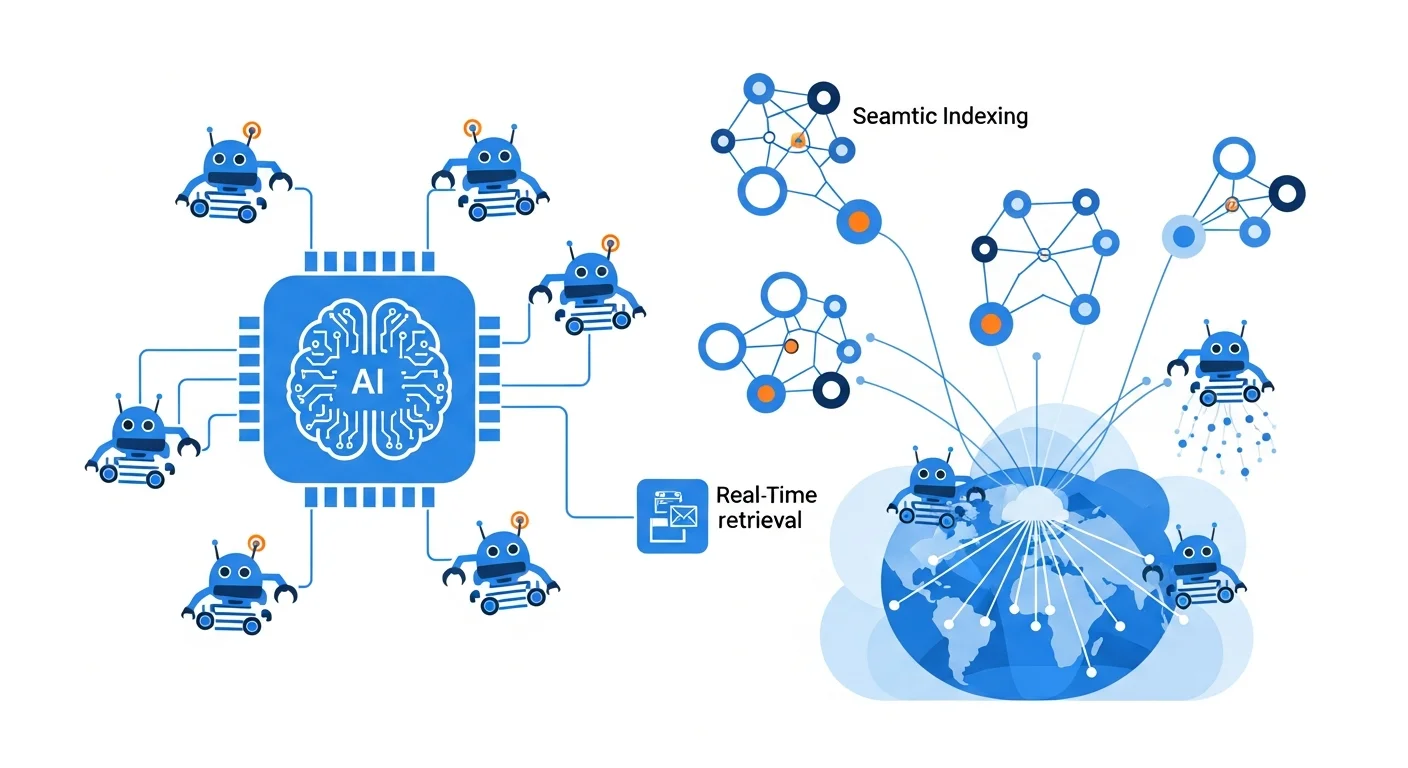
- Real-time crawling: Every time a user asks a question, Perplexity will crawl the web page content in real time (not relying on training data)
- content matching: Filter the most relevant and authoritative paragraphs from the crawl results
- sentence by sentence quote: Integrate the filtering results into answers, and mark the source of each sentence
What does this mean? Whether your content is "citable" becomes the deciding factor.
Li Wei is responsible for the overseas marketing of a B2B manufacturing company. She noticed that competing products frequently appeared in Perplexity's search results, while her own brand was always absent. After analysis, we found that the reason is simple: the competitor's blog posts use a lot of clear data tables, step-by-step lists, and paragraphs with clear conclusions - these are Perplexity's favorite content formats to quote. However, her corporate blog is mainly about brand narrative, with vague paragraphs and lack of information blocks that can be directly "extracted" by AI. 2 months after restructuring the content, the brand's presence in Perplexity increased from 0 to 3-5 times per week.
Perplexity GEO optimization focus: - Content citability optimization (clear paragraph structure, data tables, step-by-step lists) - Page loading speed (affects real-time crawling success rate) - Authoritative external link construction (Perplexity prefers content with high authority domain names) - FAQ format content (the question and answer structure is naturally suitable for AI citation) - Regularly updated content (Perplexity prefers the latest information)
Comparison of AI search optimization strategies: same goal, three paths
After completing the above comparative analysis of AI search engines, and looking at the GEO optimization strategies of the three platforms together, the differences are obvious:
| Optimize dimensions | ChatGPT | Gemini | Perplexity |
|---|---|---|---|
| most important signal | Brand accumulation in training data | Google Search Ranking + Structured Data | Citability of real-time content |
| content strategy | High authority media releases + industry white papers | Structured SEO content + Schema | Data-driven, clearly formatted articles |
| Technical requirements | Bing SEO optimization | Google SEO + Schema annotation | Page speed + structured content |
| Effective cycle | 3-6 months (training data updates slowly) | 1-3 months (linked with Google ranking) | Instant (real-time indexing) |
| Priority recommendations | B2C brand, pan-user scenarios | All businesses with Google SEO foundation | B2B, technology-based, research-based companies |
key insights: There is no shortcut to "one set of content for three platforms". But the good news is that the optimization strategies of the three platforms have a lot of overlap - high-quality, clearly structured, authoritative and credible content is popular on any platform. The difference lies in focus and distribution channels.
How to formulate a multi-platform GEO optimization plan

Based on our experience in serving multiple global expansion brands, we recommend the following phased strategies:
Phase 1 (1-2 months): Laying the foundation, covering Gemini + Perplexity
- Optimize Google search rankings (directly drive Gemini citations)
- Add Schema structured data to core pages
- Optimize content formats (tables, lists, FAQs) and improve Perplexity citation rate
- Ensure page loading speed < 3 seconds
The second stage (3-4 months): Build brand authority and conquer ChatGPT
- Publish brand content in 3-5 industry authoritative media
- Publish industry white papers or research reports
- Optimize Bing search ranking (ChatGPT search function relies on Bing)
- Build a brand knowledge graph (Wikipedia, industry encyclopedia, etc.)
The third stage (5-6 months): continuous monitoring and dynamic adjustment
- Track brands across three platforms Share of Model Indicators
- Adjust the content strategy weight according to the performance of each platform
- Pay attention to algorithm updates and new features of the AI search platform
As an official certified partner of Google (ID: 4908182032), SeaSeek has a systematic methodology and self-developed citation tracking system for multi-platform GEO optimization, and can simultaneously monitor the brand's performance changes on the three platforms of ChatGPT, Gemini, and Perplexity.
The core conclusion of the AI search engine comparison: Focusing on just one platform is the biggest risk
We have seen many companies make this mistake: they spent a lot of effort on brand mentions of ChatGPT, only to find that the target users mainly use Perplexity for product research.
According to Gartner Predictions 2025, traditional search engine traffic will decline by 25% by 2026. This traffic is being dispersed across multiple AI search platforms rather than concentrated into one.
How to determine which platform your users are on?
| User type | Mainly used platforms |
|---|---|
| Consumer/general user | ChatGPT > Gemini > Perplexity |
| B2B purchasing decision maker | Perplexity > ChatGPT > Gemini |
| technology developer | ChatGPT > Perplexity > Gemini |
| Academic/Research Staff | Perplexity > ChatGPT > Gemini |
| Android/Google ecosystem users | Gemini > ChatGPT > Perplexity |
Depending on your industry and target customer base, prioritize optimizing the platforms with the highest user density, but don't abandon other platforms entirely.
FAQ
Which is more important for brand recommendation, ChatGPT or Gemini?
Depends on your target users. If the target user is an active user of the Google ecosystem, Gemini will have a higher weight; if the target user is a pan-Internet user, ChatGPT will have wider coverage. The best strategy is SEO + GEO dual-track simultaneous advancement, because if Google SEO is done well, Gemini will naturally follow.
Perplexity has such a small user base, is it necessary to optimize?
Although the number of users of Perplexity is not as high as that of ChatGPT, the quality of users is very high-mainly professionals and decision-makers. To a B2B business, one brand recommendation from Perplexity may be more valuable than ten from ChatGPT. And the core of Perplexity optimization (structured content, data tables) is equally beneficial to traditional SEO.
Can the same set of content be used for GEO optimization on three platforms?
Basic content can be reused, but needs to be differentiated for each platform. For example, for the same industry report: media distribution for ChatGPT (increasing training data awareness), Schema annotation for Gemini (enhancing structured understanding), and paragraph optimization for Perplexity (improving citability).
Is it feasible to do multi-platform GEO optimization by yourself?
Yes, but it's a lot of work. The three platforms need to be monitored, optimized and tracked separately. If the team has no experience in AI search optimization, it is recommended to start with Google SEO + Gemini (because the SEO foundation can be reused), and then gradually expand to ChatGPT and Perplexity. Or directly search for multiple platforms Service provider with GEO optimization capabilities.
Summary: What the AI Search Engine Comparison Tells Us
Through the system comparison of ChatGPT vs Gemini vs Perplexity, the core conclusion is very clear - ChatGPT looks at brand accumulation, Gemini looks at Google signals, and Perplexity looks at content citability. Optimizing only one platform means only covering one-third of the AI search ecosystem.
The good news is that high-quality content is a common "passport" for all three platforms. The differences lie in the format of the content, distribution channels and technical signals. Understanding these differences is the key to developing a truly effective multi-platform GEO strategy.
next steps: Schedule an Appointment for a Free AI Search Visibility Diagnosis, we will help you detect the current performance of your brand on the three platforms of ChatGPT, Gemini, and Perplexity, and give you targeted optimization suggestions.