Many teams spend $100, 000 a month running Google ads, but the ROAS is stuck at 2: 1 and cannot move. Then they change the bid strategy, but after the change, it is still 2: 1. Changing the material, it's still 2: 1. Find an agent to review, and it is recommended to change the bidding strategy.
We have seen this cycle too many times.
The real problem is that ROAS stuck usually has not one cause, but rather one (or more) of 4 root causes at work at the same time. Blindly changing bidding strategies is like stepping on the accelerator when a car skids, and the more you step on it, the more it spins around.
This article breaks it down one by one from the four dimensions of conversion tracking accuracy, account structure, bidding strategy selection, materials and landing pages. Each module provides specific troubleshooting methods and optimization paths. Google Advertising ROAS optimization is not a metaphysics, it is an engineering problem that can be systematically diagnosed.
1. ROAS is stuck. First figure out what type of problem it is.
Before starting to optimize, the most worthwhile step is toQualitative question,, Where is your ROAS stuck?
Common 4 types of root causes:
1. Inaccurate conversion tracking (easiest to be ignored and most destructive)
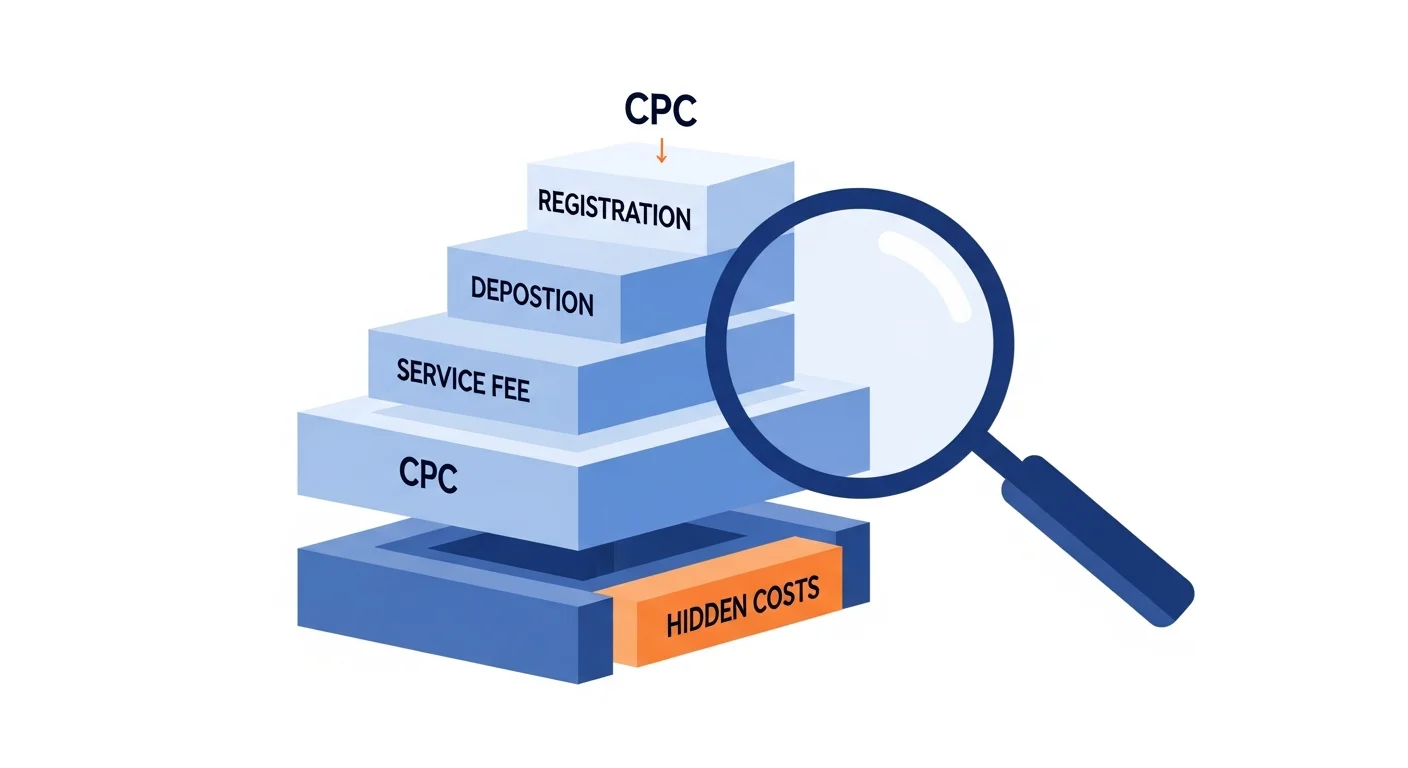
If the conversion data itself is wrong, all data-based optimization decisions will be invalid. Google Ads' smart bidding relies entirely on conversion signals, and data distortion is equivalent to feeding the system false food.
2. The account structure is confusing
If cold start campaigns and remarketing campaigns are run together, the bidding logic of the two types of users is completely different, and mixing them together will lower each other's performance. The system does not know who to serve first, and resource allocation will be out of order.
3. The bidding strategy does not match the account stage
It is a very common mistake to directly use the target ROAS (tROAS) during the cold start phase. The system does not have enough conversion data for learning. It is like letting a newly hired employee make decisions independently, and the result will most likely be chaotic.
4. The connection between the material and the landing page is broken
The advertisement attracts users, but the landing page does not complete the last mile of conversion. In this case, no matter how you optimize the delivery side, the conversion rate will not be substantially improved.
Mini-story: A real case that makes people laugh and cry
A cross-border e-commerce customer with a monthly budget of US$80, 000, mainly engaged in home furnishing categories, targeting the North American market. The account has been running for nearly half a year, but ROAS has always been stuck at 1. 8: 1. The team has repeatedly adjusted the bidding strategy, from manual CPC to target CPA, and then to target ROAS, but there has been no improvement.
The first thing we did after getting involved was not to look at the bids, but to conduct a full-link conversion diagnosis using the independently developed "Clue Conversion Intelligent Analysis Tool System" (National Software Registration, Certificate No. 2023SR0851844). It was found that their "purchase" conversion code was triggered twice at the same time on the thank you page, once from the Google Ads code and once from the conversion imported by GA4. The system counts each order as 2 conversions, and the ROAS number is artificially lowered by nearly half.
After correcting tracking, actual ROAS has stabilized at 3. 5: 1.The problem is not at all in delivery, in the data foundation.
This case illustrates one thing: the order of investigation is more important than the optimization action itself.
2. Conversion tracking accuracy: the foundation of Google advertising ROAS optimization
Why inaccurate tracking ruins everything
Google Ads' smart bidding system (including target CPA and target ROAS) is a machine learning model whose core input is conversion data. Data quality directly determines the decision-making quality of the model.
Distortion of conversion data can lead to:
- The system misjudges which keywords, audiences, and time periods are "bringing conversions" and continues to direct budgets in the wrong direction.
- The ROAS numbers you see are fake and don't allow you to make good budget decisions
- Optimization actions are all based on wrong benchmarks, and the more optimized they are, the more biased they will be.
Common Type 4 tracking issues
- Repeat count: The same conversion is triggered multiple times by multiple tags (most common)
- Cross-device attribution break: Users browse on mobile phones and purchase on computers, and the conversions are not correctly attributed.
- GA4 fights with Google Ads data: The conversion definitions of the two systems are inconsistent, resulting in data mismatch.
- Conversion window setting error: B2B product decision-making cycle is long, but the conversion window is set to 7 days, and a large number of conversions are missed
4-Step Quick Diagnosis Checklist
- Check for repeated triggers: Enter the Google Ads backend → Tools → Conversion → View the "Count" setting of each conversion operation. Purchase conversions should be set to "Every time" instead of "Every"; also confirm whether there are both Google Ads code and similar conversions imported by GA4.
- Compare GA4 and Google Ads data: In the same time period, if the difference in the number of conversions between the two sides exceeds 20%, it needs to be investigated
- Detect in real time with Tag Assistant: Install the Google Tag Assistant plug-in to simulate the real purchase process and confirm the timing and number of code triggers.
- Check conversion value delivery: E-commerce accounts need to dynamically transmit order amounts. If all conversion values are fixed values, the ROAS calculation basis will be wrong.
For a more complete troubleshooting method, refer to:Google Ads Conversion Tracking Troubleshooting Guide
3. Account structure determines ROAS ceiling
Core logic: different users, different goals, different bids
The essence of the account structure is to manage users with different intentions separately..
The conversion probability of cold traffic who has never been exposed to your brand and remarketing users who just added products to their shopping carts yesterday can be 10 times different. If the same bidding target is used to serve them, the system will continue to struggle between "bidding for high-intention users is not aggressive enough" and "bidding for cold traffic is too high", and ultimately neither party will be pleased.
Recommended three-layer structure
The first level: cold start series
- Goal: Reach new users who have never been exposed to the brand
- Audience: Exclude website visitors and existing customers
- Bidding strategy: Use maximizing clicks or manual CPC in the cold start phase to accumulate data first
- Budget proportion: depending on the stage, 30-40% is recommended for mature accounts
Second level: high intention series
- Target: Users who have expressed clear purchase intentions (search for keywords with high commercial intent)
- Typical scenarios: Google Search brand words, competitive product words, product category words
- Bidding strategy: switch target CPA after conversion data is accumulated
- Budget proportion: Recommended 40-50%
The third level: remarketing series
- Target: Users who have visited the website but have not converted, or users who have purchased (for repurchase/up-sell)
- Audience: website visitors, shopping cart abandoners, past buyers
- Bidding strategy: can be more aggressive, because these users have a high conversion rate and deserve a higher CPC
- Budget proportion: Recommended 15-25%
Why can't we run together?
A real comparison: After we helped a cross-border e-commerce client separate the remarketing audience from the main advertising campaign and manage it separately, the ROAS of the remarketing series increased from 3. 1: 1 to 5. 8: 1, and the ROAS of the main advertising campaign also increased from 1. 9: 1 to 2. 7: 1. The reason is simple: after splitting, the system can independently optimize each layer of the audience without interfering with each other. This is also one of the core logics of our "Intelligent Advertising Delivery Optimization System" (certificate number 2023SR0851900): automatically identify users with different intent levels across platforms and dynamically allocate bids and budgets.
For detailed instructions on setting up the account structure, please refer to:Guide to building a Google Ads account structure
4. Correct usage of bidding strategy
The "smarter" the bidding strategy is, the better
The smart bidding feature of Google Ads is indeed powerful, but it has a prerequisite:Sufficient historical conversion data.
According to Official Google Smart Bidding instructions, the target ROAS strategy needs to accumulate at least 50 conversions in the past 30 days and have a stable conversion value to operate effectively. If it is used forcefully when there is insufficient data, the system will enter a state of "continuous learning but never convergence", and the performance will be worse than manual control.
Three-stage bidding strategy switching timing
Cold start stage (0-3 months, number of conversions < 50/month)
Strategy options:Maximize clicks or Manual CPC
The goal of this stage is not to optimize ROAS, but to accumulate enough conversion signals for the system to learn. Maximizing the number of clicks can quickly bring traffic and establish basic conversion data. Set a reasonable maximum CPC cap to control the cost per click.
Common mistakes: eager for quick results, cold start directly to the target ROAS. If the system has no data to learn, it will bid randomly, ROAS will be unstable, and the account will enter an endless loop of "learning-failure-reset".
Growth stage (number of conversions ≥ 50/month, data begins to stabilize)
Strategy options:Target CPA (tCPA)
When the account steadily accumulates more than 50 conversions per month, you can switch to target CPA. This strategy helps the system learn "what types of users are more likely to convert" and gradually improve the conversion rate.
Switching suggestion: Set the initial CPA target at 1. 1-1. 2 times the historical average CPA (slightly looser) to give the system room to learn, and then gradually tighten it after stabilizing for 2 weeks.
Mature stage (sufficient conversion data, stable value)
Strategy options:Target ROAS (tROAS)
It is appropriate to enable target ROAS when the account has stable conversion volume and conversion value data, and the business goal switches from "reduce CPA" to "optimize input-output ratio". This is the most sophisticated bidding method, but it also requires the highest data quality.
Recommendation for tROAS target value: start from 80-90% of the historical average ROAS, give the system enough bidding space, and then adjust it every 2 weeks, with each adjustment not exceeding 10-15%.
For more detailed bidding strategy selection logic, please refer to:How to choose a Google advertising bidding strategy
5. Materials and landing pages: the last mile of Google advertising ROAS
ROAS is advertising efficiency multiplied by landing page conversion rate
There is a formula worth remembering:
ROAS = Ad click quality × Landing page conversion rate × Customer unit price
Among the three variables, many teams only focus on "ad click quality" (keywords, bids, audience), but ignore the landing page conversion rate.
Take a specific scenario as an example: Assume that the advertising CTR is normal and the CPC is reasonable, but the conversion rate of the landing page is only 1%, while the industry average is 3%. This means that for every 100 users you bring in, you only complete 1 conversion when you could have completed 3. ROAS is reduced by 2/3 due to landing page efficiency. No matter how you adjust delivery, you cannot reach this ceiling.
Broken information transmission is the biggest culprit of loss
The advertisement says "Limited time 20% off promotion". When users click in, they see the default homepage without any promotional information.
This gap will cause cognitive friction of "information mismatch" within the first 3 seconds of the user entering the landing page, which will directly lead to a bounce. Our own data shows that when the advertising information is highly consistent with the landing page, the conversion rate is 40-60% higher on average than when the information does not match.
3 key points for landing page optimization
1. Loading speed
According to research data from Think with Google, for every 1 second delay in landing page loading time, mobile conversion rates drop by approximately 20%. Use PageSpeed Insights to detect landing page scores. Those with mobile scores below 70 must be prioritized.
2. Consistency in information reception
The ad title, USP (core selling point), and promotional information must be fully presented on the home screen of the landing page. When a user comes in from an ad, their brain is looking for confirmation that "I'm in the right place." The copy and visuals above the fold must give this confirmation.
3. CTA Clarity
One page, one main action. The copy of the CTA button should clearly tell the user what will happen after clicking: "Buy now," "Try it free for 14 days," "Get a quote," rather than vague expressions such as "Learn more" or "Submit."
For more ways to combine materials and landing pages, please refer to:How do Google creatives and landing pages work together?
6. The rhythm of Google advertising ROAS optimization: how often should it be adjusted?
The 7-day observation window is the baseline
Modifications to the bidding strategy require sufficient learning time for the system. Google Ads' smart bidding has a "learning period" mechanism. After each major adjustment, the system needs 1-2 weeks to re-collect data and adjust the model. Frequent changes equal constant reset of learning progress.
Recommended frequency:
- Bidding strategy (major change): observe at least 14 days after each modification, and do not make major adjustments continuously within 7 days
- Bid target (minor adjustment): Adjust the amplitude by 10-15% each time, and decide whether to continue adjusting after 7 days of observation
- Budget adjustment: A magnitude < 30% usually does not trigger a reset of the learning period; more than 30% may require 5-7 days to relearn
What data is worth reacting to and what is noise?
worthy of reaction:
- ROAS is more than 20% below target for 14 consecutive days
- The conversion volume of a certain campaign dropped sharply by 50% (check the tracking issue first)
- Large-scale changes in competitors lead to abnormal increase in CPC
usually noise:
- Single-day or weekend data fluctuations (e-commerce has obvious intra-week rhythm)
- Short-term anomalies around holidays (peak traffic periods such as Black Friday and Christmas)
- Unstable performance when the account is in the learning period
Correct order of optimization
This is critical:If the order of optimization is wrong, every effort will be in vain..
Correct order:
1. Conversion tracking (ensure data accuracy)
 ↓
2. Account structure (hierarchical management of users with different intentions)
 ↓
3. Bidding strategy (match current data volume and stage)
 ↓
4. Materials and landing pages (increase the conversion rate at the end of the funnel)
Doing it backwards (changing materials first, then adjusting bids, and finally checking tracking) is the most common inefficient path.
Conclusion: ROAS optimization is system diagnosis, not button parameter adjustment
Review the 5 core actions of this article:
- Check conversion tracking first: Before doing any optimization, make sure the data foundation is accurate
- Split account structure: Cold start, high intent, and remarketing are three independent management layers, do not mix them together.
- Match bid strategies and stages: Use manual CPC to accumulate data in the cold start stage, and then use tROAS in the mature stage.
- Connect materials and landing pages: Advertising information and landing page information are highly consistent, reducing the loss after entering the funnel.
- Optimize in the correct order and give the system enough learning window: Don't make frequent and drastic changes during the learning period
Google Ads ROAS optimization is not about adjusting buttons behind the ad, but a systematic diagnosis. Only by finding the real limiting factors can optimization resources be used wisely.
If your Google Ads account ROAS has been stagnant for more than 30 days, or you're not sure your conversion tracking is accurate, SeaSeek offers a free account diagnostic service. As an official Google Certified Partner (Verification link), our team holds 100% Google Ads certification and is equipped with a self-developed intelligent bidding system and conversion tracking system (both national-level software), which can quickly locate most common problems.
Among the clients we serve, e-commerce brands' ROAS increased by an average of 66% (from 2. 1X to 3. 5X), and B2B SaaS lead costs decreased by an average of 57%. These data are not industry benchmarks, but are the results of our actual delivery.
Make an Appointment for Free Account Diagnosis, initial feedback is usually given within 1 business day.
If you need systematic Google ad hosting services, learn about ourOmni-channel advertising managed advertising services, see how we help other global expansion teams achieve continuous ROAS improvement.