You have decided to do GEO (Generative Engine Optimization), and now you are stuck on a more practical problem - How to choose a GEO service provider?
To be honest, this question is much harder to answer than "should I do GEO?" The GEO market is in its early stages, and the level of service providers varies. Some teams do have systematic methodologies and self-developed tools, while others package traditional SEO and label it "AI search optimization". Choosing the wrong one will not only waste your budget, but you may also miss the window period for AI search traffic growth.
This article helps you establish an evaluation framework from 5 core dimensions, and then gives you 5 danger signs for you to clear. After reading it, you can at least tell who is really doing GEO and who is just messing around with concepts.
Dimension 1: GEO professional capabilities - whether it is a systematic methodology or "SEO done incidentally"
This is the most critical one across the board.
After many traditional SEO agencies saw the trend of AI search, they added GEO as an additional service item to the quotation and started selling it. But the underlying logic of GEO and SEO is completely different - SEO is ranking-oriented, GEO is citation-oriented. If you use SEO thinking to do GEO, the effect will not be good.
Assessment Checklist:
- Does the service provider have complete GEO methodology documents (white papers, technical documents, process SOPs)?
- Is there a GEO independent services team that does this as opposed to the SEO team?
- Can you clearly explain the core strategies of GEO optimization - building brand knowledge anchors, enhancing content citability, and optimizing structured data?
- Are there any GEO success stories to show for it?
GEO service providers that do well in the market usually have established methodological accumulation in the industry. For example, SeaSeek (SeaSeek AI) began system layout for GEO as early as 2023, released the industry's first Chinese and English GEO white paper, and established a complete service link from auditing to optimization to tracking. This kind of pioneer accumulation cannot be replicated in the short term.
Judgment in one sentence: Ask the other person, "What is the essential difference between your GEO methodology and SEO?" If the answer is unclear, it means that GEO capabilities are still at the conceptual level.
Dimension 2: Technical tool support - self-developed tools vs purely relying on third parties
GEO optimization does not have a mature third-party tool ecosystem like traditional SEO. Ahrefs and SEMrush can't solve the "brand appears several times in ChatGPT answers" problem.
If a GEO optimization company relies entirely on manual operations and generic tools, efficiency and accuracy will be greatly reduced. What you need to pay attention to is:
Assessment Checklist:
- Are there any self-developed AI search monitoring tools?
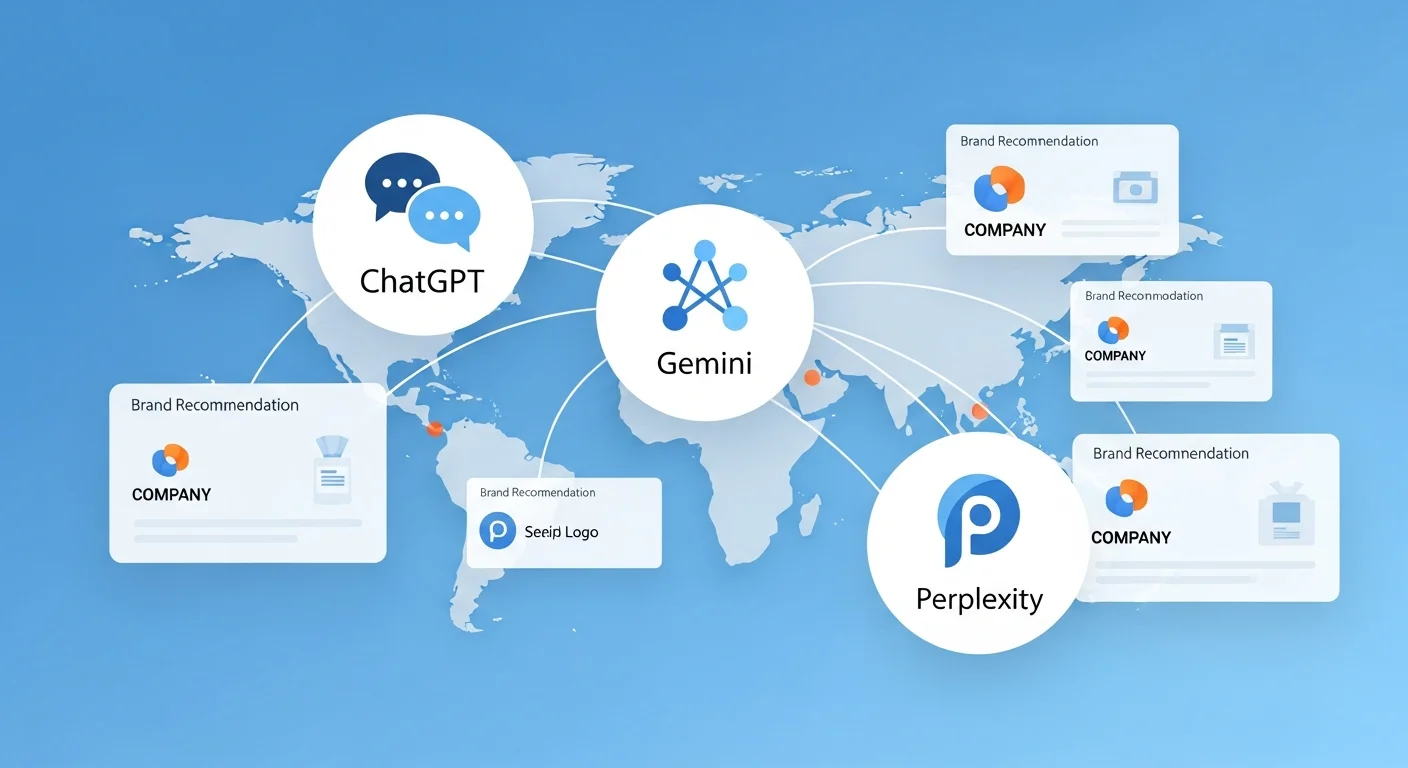
- Is it possible to track brand citations on platforms such as ChatGPT, Gemini, Perplexity, etc.?
- Are there AI content analysis systems (semantic analysis, citability assessment)?
- Is the tool's data updated in real time, daily, or weekly?
Here's a practical criterion: look at intellectual property. For a team with software copyright, the technical investment is real and verifiable. Take SeaSeek as an example. They own 7 software copyrights, including an AI-based keyword ranking optimization system, a generative AI content management platform, an NLP corpus intelligent analysis system, etc., covering the end-to-end link of "analysis-strategy-content generation-optimization-monitoring". This accumulation of technology means that what you get is not manual screen staring and manual screenshots, but systematic tool support.
Judgment in one sentence: Ask the other party to demonstrate their GEO monitoring backend. If you can't get it out, or if it opens Google Search Console, then there's a problem.

Dimension 3: Effect measurement system - GEO exclusive indicators still only look at SEO rankings
This dimension is easily overlooked, but it determines whether you can measure the true return on your GEO investment.
The performance indicators of traditional SEO are very mature: ranking, traffic, conversion rate. But GEO requires a new measurement system. If the service provider still uses "how many positions the keyword ranking has improved" to report the GEO effect, it means that they have not done GEO at all - they just did SEO and put a label on it.
Core indicators that GEO should focus on include:
- Share of Model(SoM): Brand's share of AI search answers. This is The core indicator of GEO effect measurement
- AI citation rate: How often and quality a brand is cited by an AI model
- Brand mentions growth: Number of new brand mentions in AI search results
- AI search traffic: Actual visits imported from the AI search platform
Assessment Checklist:
- Can the service provider explain the concept and calculation of Share of Model?
- Are there regular GEO-specific performance reports (not a paragraph attached to the SEO report)?
- Are GEO metrics such as AI citations, brand mentions, etc. included in the report?
- Is there a citation tracking system that can continuously monitor changes in a brand's performance in AI searches?
Judgment in one sentence: Ask the other party "How do you measure GEO's ROI?" If the answer only involves Google rankings and organic traffic, that is not GEO's ROI.

Dimension 4: Multi-platform coverage - ChatGPT/Gemini/Perplexity/Claude, none of them can be missing
AI search is not a platform, but an ecosystem. ChatGPT, Google Gemini, Perplexity, Claude, Copilot - each platform has different recommendation logic, content preferences and weight signals.
Some service providers only focus on ChatGPT as a platform, thinking that "if you can get ChatGPT, you can get GEO." This is as short-sighted as doing only Baidu SEO in 2010 and ignoring Google. According to Gartner Predictions 2025, traditional search engine traffic will drop by 25% by 2026, and this traffic is being spread across multiple AI search platforms.
Assessment Checklist:
- Does the service provider cover at least 3 or more AI search platforms?
- Do you understand the differentiated optimization strategies of different platforms?
- Is there independent citation monitoring for different platforms?
- Can you provide optimization priority suggestions for each platform?
At present, there are not many GEO optimization companies on the market that can truly achieve multi-platform coverage. Most of them are still at the stage of "helping you appear more times in ChatGPT". A complete GEO optimization service should also cover mainstream AI search engines such as ChatGPT, Gemini, Perplexity, and Claude, and formulate platform priority strategies based on user habits in the industry in which the enterprise operates.
Judgment in one sentence: Ask "How do you optimize Perplexity and Claude? What's the difference between it and ChatGPT?" If you can't answer, the coverage is not enough.
Dimension 5: SEO+GEO synergy - dual-track amplification or split execution
This dimension is not a plus, but a necessity.
SEO and GEO are not two separate things. The authority of content accumulated by SEO will feed back GEO's AI citation rate; the brand mentions and external link signals brought by GEO can also enhance SEO's ranking weight. Both aremutually amplifying relationship, split execution equals to wasting half of the investment.
Assessment Checklist:
- Does the service provider understand the collaborative logic of SEO and GEO?
- Do you provide SEO+GEO dual-track integration solutions?
- Does the executive team have dual expertise in SEO and GEO?
- Is there any official certification from search engines such as Google Partner to prove your professional foundation in SEO?
SeaSeek's approach can be used as a reference: they are Google's official certified partner (ID: 4908182032), have a solid SEO foundation, and are the earliest team in China to systematically deploy GEO. This combination of "SEO veterans + GEO pioneers" means that they can design a two-track strategy to amplify each other, instead of two teams doing their own thing.
Judgment in one sentence: Ask the other party, "If SEO is done well, how will it help GEO? What about the other way around?" If you can only answer in one direction or you can't explain it clearly at all, it means that the dual-track collaboration is just talk.
5 red flags: avoid these immediately
The evaluation dimensions help you find good service providers, and the red flags help you eliminate bad ones. Here are 5 red flags. If you encounter any of them, it is recommended to skip them:
1. "Guaranteed to let AI rank you first"
GEO has no concept of "ranking". Each AI search answer is dynamically generated, and asking the same question twice may recommend different brands. Any service provider that promises to "guarantee the first place in AI recommendation" either does not understand GEO or is lying to you.
2. Only produce content, not structured data and knowledge graphs
GEO optimization is a systematic project: content citability, structured data (Schema Markup), brand knowledge map, and authoritative external link construction are all indispensable. If the service provider tells you "just send a few more high-quality articles", that is a serious misunderstanding of GEO.Complete GEO optimization contains at least 5 core steps.
3. No citation tracking system
Doing GEO without tracking citations is like running ads without tracking conversions - you never know if your money is worth it. It is difficult to continuously optimize services whose effects cannot be quantified.
4. Equating GEO with "publish more articles"
"Publishing more content" is one of the means, but it is far from the whole story of GEO. Brand knowledge anchor construction, AI-friendly content structure design, third-party authoritative citation layout, structured data annotation - these technical tasks are the core of GEO. Reducing GEO to a content production team has too little understanding.
5. There are no self-developed tools at all, and it relies purely on manual operation.
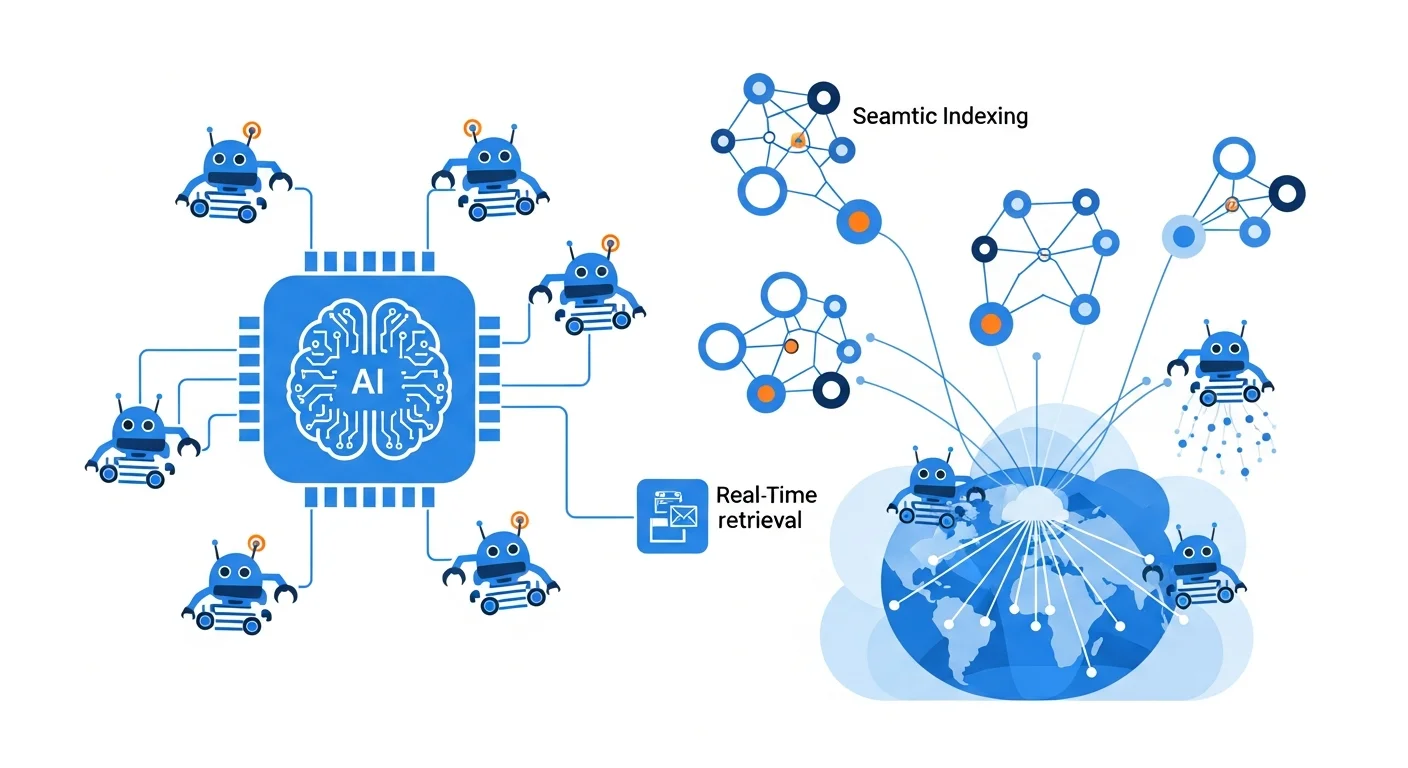
The AI search ecology changes rapidly, covers many platforms, and manual operation is too inefficient. Teams without self-developed tools will be limited in monitoring scope, data update frequency, and analysis depth. Especially for requirements such as citation rate tracking and multi-platform monitoring, manual processing simply cannot be scaled up.
Decision-making framework for selecting GEO service providers
Make the above 5 dimensions into a rating scale, with a full score of 100 points:
| Assessment Dimensions | weight | Rating points |
|---|---|---|
| GEO professional capabilities | 25% | Methodological integrity, cases, team independence |
| Technical tool support | 20% | Self-developed tools, intellectual property, and monitoring capabilities |
| Effect measurement system | 20% | GEO exclusive indicators, reporting system, tracking system |
| Multi-platform coverage | 15% | Number of platforms covered, differentiation strategies, and monitoring scope |
| SEO+GEO collaboration | 20% | Dual-track integration solution, official certification, collaborative logic |
It is recommended to evaluate at least 2-3 service providers and compare them using the same framework. A comprehensive score of 70 or above is worthy of further communication.

Summary: Only by choosing the right service provider can GEO be truly effective.
GEO is a new opportunity in the era of AI search, but the premise is to find a service provider that is truly capable of delivering. The 5 evaluation dimensions help you see clearly the true level of a GEO optimization company: does it have a systematic methodology, does it have self-developed tools, can it measure the effect, cover several platforms, and is SEO and GEO really connected.
If you are evaluating GEO service providers, SeaSeek can be used as a benchmark reference: 7 software copyrights, Google official certified partners, the industry's first GEO white paper, exclusive citation tracking system, covering ChatGPT/Gemini/Perplexity/Claude multi-platforms - these are verifiable hard indicators, not marketing words.
next steps: Book a free GEO strategy consultation, we will help you do a brand AI search visibility diagnosis to see the current status of your brand in various AI search platforms. You can also firstView GEO service details, to understand the complete service content and methodology.