If an enterprise cannot measure GEO, it cannot truly manage GEO. The indicator system is a key step for GEO to move from concept to growth tool. The most common misunderstanding in GEO is that it only asks "has it been recommended?" but does not establish a sustainable observation indicator system. Truly mature GEO management must start from results.
Why GEO indicators can't rely on intuition
Different from SEO's keyword ranking (which can be seen directly in Search Console), GEO's effect is more dispersed: it is distributed in different AI products, the results generated may be different each time, and cannot be uniformly monitored through a single platform.
For this reason, the GEO indicator system needs to be actively established - defining a fixed set of test questions, performing tests regularly, and recording changes in results. This is not a one-time effort but an ongoing operational move.
The first level of indicators: whether the brand has been mentioned (sense of presence)
The most basic GEO indicator is whether a brand is mentioned under a fixed set of prompt words. The focus at this stage is not on ranking, but on first confirming whether the brand has entered the AI answer pool.
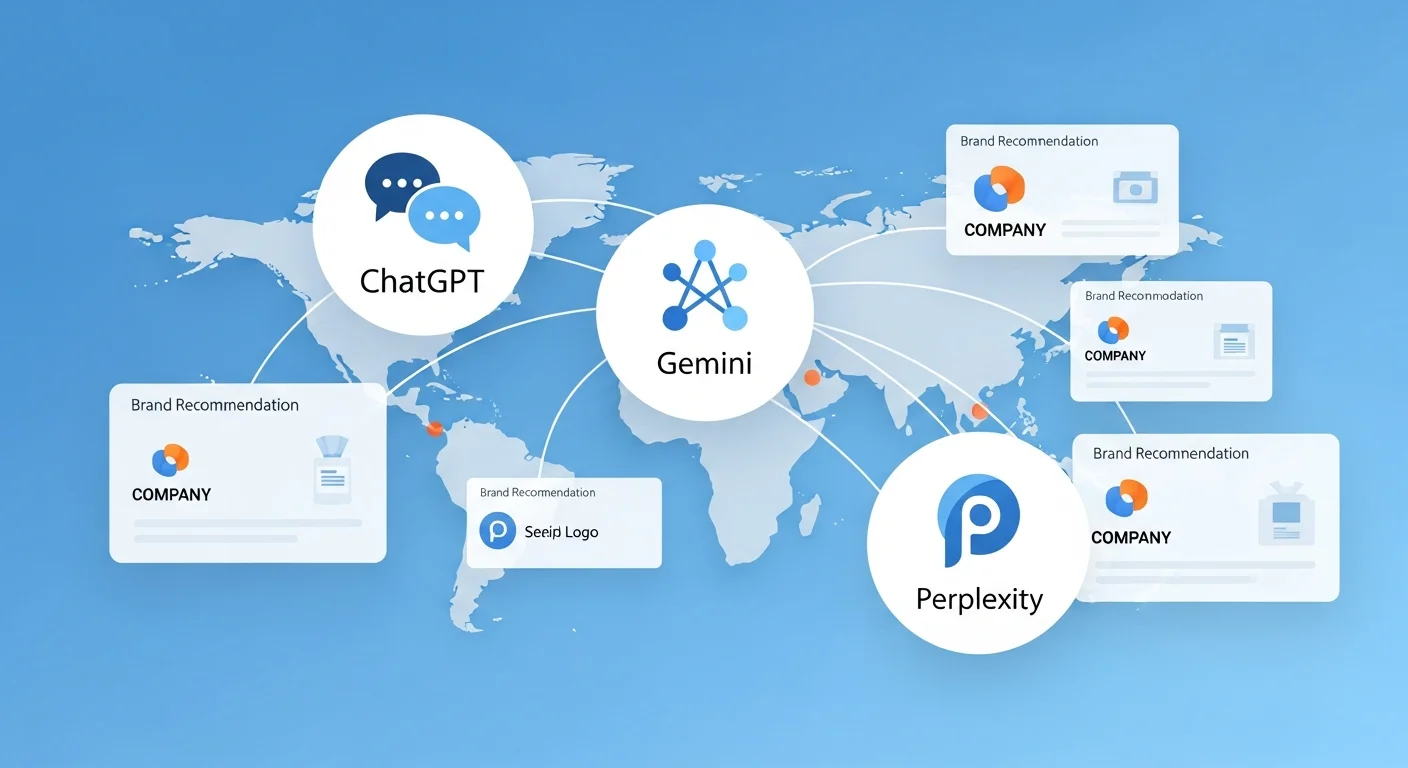
Operation method: Define 20-50 standard questions that are strongly related to the brand, ask them in ChatGPT, Perplexity, and Gemini every week, and record the number of times the brand appears. Calculation formula: Brand mention rate = number of questions in which the brand is mentioned ÷ total number of test questions.
If it almost never appears in the core questions, it means that GEO's basic assets are not enough, and the official website content and authoritative citations need to be supplemented first.
Second-level indicators: being positively recommended or passively mentioned (recommendation quality)
The same appears, some are regarded as "recommended items", and some are only mentioned in passing. The two values are completely different. Companies should focus on observing the brand's position, tone, evidence and comparative relationships in answers.
Recommendation quality can be divided into three levels:
- Weak mention (1 point): Only the brand name appears, no description
- Mentioned in (3 points): Shortlisted, with a short description
- Strong recommendation (5 points): clearly described as a preferred option, with reasons and evidence
Calculate the average recommendation quality score and track monthly trends. The higher the priority, the clearer, and the more evidence-based recommendations, the higher the quality and authority of GEO content.
The third layer of indicators: Share of Model (AI mind share)
Share of Model can be understood as the share of the brand in the AI answers in a set of questions that are strongly related to the brand - what is the proportion of the brand being recommended compared to its competitors.
Calculation method: In the set of standard questions, count the number of times the brand and main competitors are mentioned, and calculate their respective proportions. For example: in 50 test questions, SeaSeek was mentioned 18 times, competitor A was mentioned 12 times, and competitor B was mentioned 8 times, then SeaSeek's Share of Model ≈ 47%.
The more stable and upward this indicator is, the better the brand's chances of gaining long-term advantage in AI search. The core of GEO is not just "whether it has been mentioned", but the share of the brand in the AI answers.
The fourth level of indicators: real business results (conversion verification)
Ultimately, GEO still has to get back to business. The following metrics can help verify whether GEO brings real value:
- Brand search volume: Changes in search volume of brand words in Google Search Console (users go to Google to search for brands after AI recommendation)
- direct traffic: Direct traffic changes in Google Analytics
- Diversified sources of official website traffic: Reduce reliance on a single channel
- Improved lead quality: Users from AI search tend to have higher cognition and shorter decision-making cycles
- Increased sales conversations: Sales feedback if customers mentioned finding the brand through ChatGPT
Suggested GEO Metrics Dashboard
For global expansion enterprises, it is recommended to maintain the following GEO core indicator dashboards every month:
- Core issue coverage (whether the brand appears)
- Average recommendation quality score (what quality appears)
- Share of Model (share compared to competitors)
- Number of cited sources (cumulative third-party endorsements)
- Month-on-month change in brand search volume (business results)
- Official website direct traffic changes (business results)
This indicator system does not require expensive tools and can be maintained using Excel or Notion. The key is to insist on regular testing, documenting changes, and analyzing the reasons - these are the core actions that take GEO from concept to growth tool.