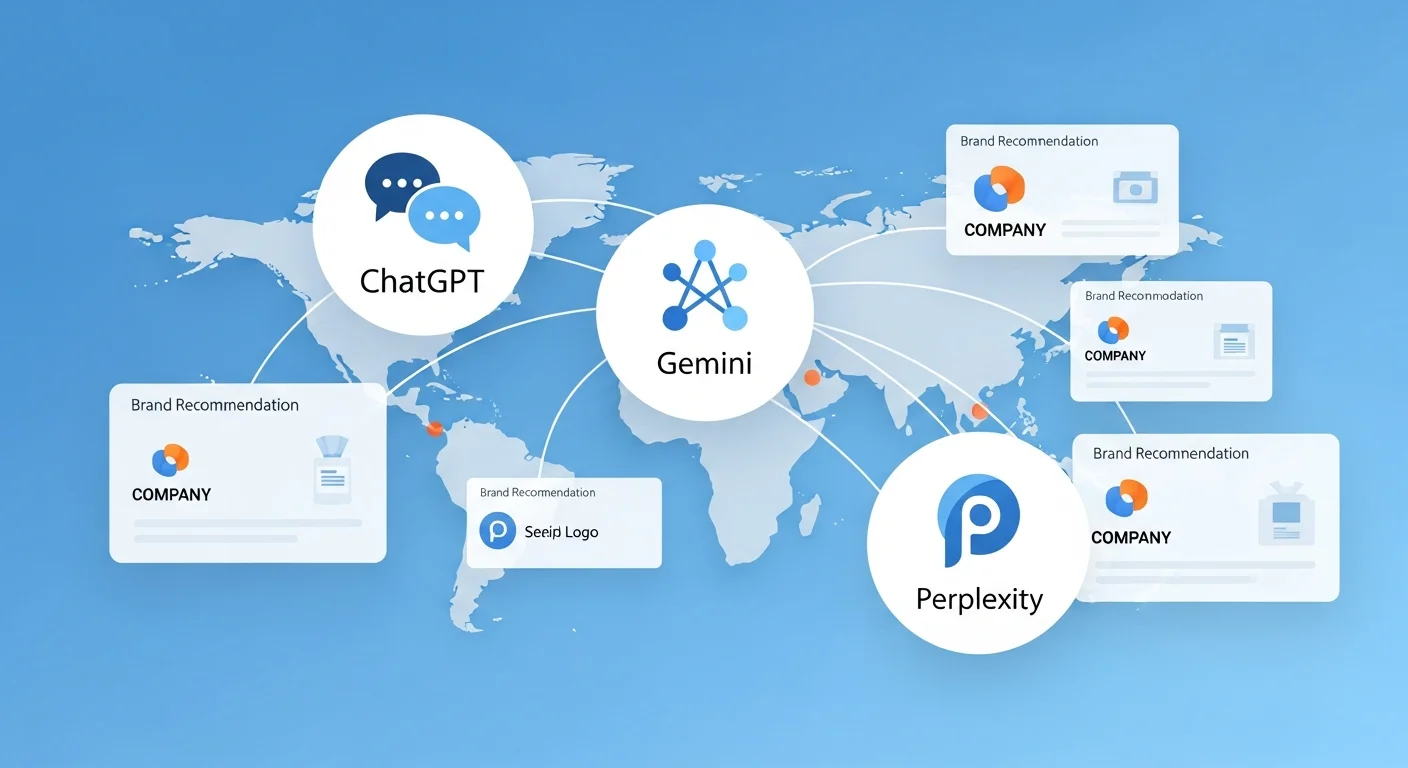
Many global expansion teams spend a lot of time optimizing Google SEO, but they don't realize one thing: their potential customers are already asking ChatGPT to "recommend a cross-border logistics tool." You're on the first page of Google, but completely missing from ChatGPT's answers.
This is not an isolated phenomenon. According to research data from Search Engine Journal, the monthly active users of AI search tools (ChatGPT, Perplexity, Gemini) will exceed 500 million in 2026, and a considerable proportion of these users will use AI to conduct brand research before purchasing decisions. Your potential customer is probably in an AI dialogue box, asking a question that you should have shown up but didn't.
How to get ChatGPT to recommend your brand, this is the core problem to be solved by GEO (Generative Engine Optimization). Unlike SEO optimizing page rankings, the goal of GEO is to make your brand the preferred source for AI citations. The underlying logic of the two is different, and the operation methods are also different.
This article gives you 5 GEO optimization actions you can perform immediately. Not talking about concepts, just how to do it.
First figure out how to choose the answer in ChatGPT
Before you start, there's one thing you need to understand: ChatGPT's recommendations are not random.
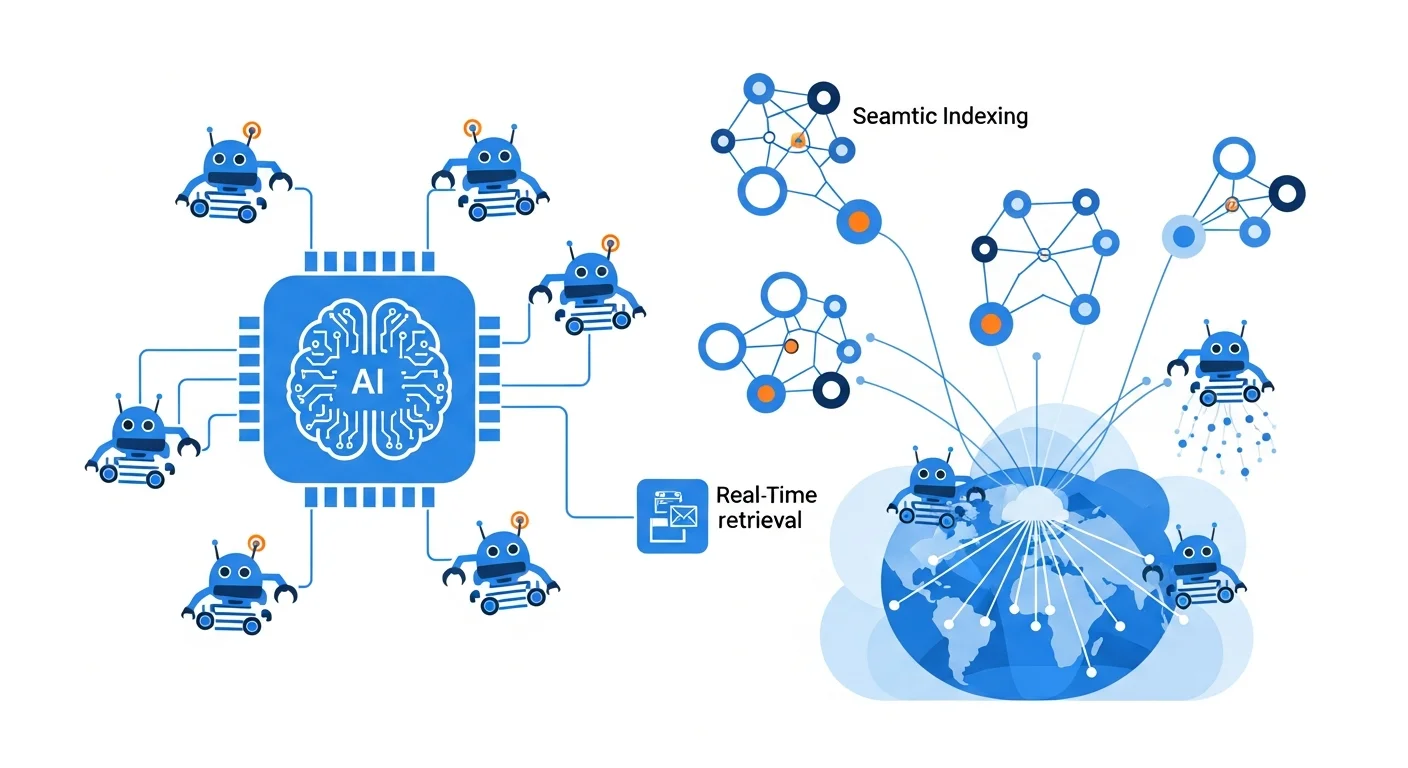
There are three levels of information sources for AI search: Training data (massive text absorbed by the model during training), real-time retrieval (ChatGPT crawls Bing and authoritative web pages in networking mode), knowledge graph (structured databases such as Wikipedia and Wikidata).
We analyzed the brands that appear in AI search recommendations among the 500+ global expansion companies served by SeaSeek (covering e-commerce, SaaS, gaming, education, financial technology and other industries) and found that they have three common characteristics:
- authoritative: Cited by other authoritative websites, and the citation sources are of high quality (industry media, partners, industry reports)
- clarity: The official website and public content can directly answer user questions, without the need for AI to guess or infer.
- coverage: Brand information is consistent across multiple platforms (official website, LinkedIn, Crunchbase, media reports) and mutually corroborated
This is the underlying logic of GEO:Make your brand the "most trusted source of answers" in the eyes of AI.
After understanding these three characteristics, the logic of the next five steps will be clear.
Step One: Establish "Brand Knowledge Anchor"
What is knowledge anchor
Knowledge anchors are brand information nodes that AI can clearly identify and reference. To put it simply, when AI searches for "who is the most credible answer in this field" in a large amount of text, it can stably find your information.
Without clear knowledge anchors, even if you have a lot of content, AI cannot accurately extract and quote your brand.
How to do it specifically
First, optimize the "About Us" page of the official website. This page is the first stop for AI to recognize your brand. Must include: brand definition (clearly describe who you are and what you do in one sentence), core capabilities (what is the biggest difference between you and competing products), service data (specific numbers, such as "serve 500+ global expansion companies, manage 500 million+ advertising budget").
The more specific the number, the higher the probability of an AI citation. "We serve many customers" and "We serve 500+ global expansion companies and manage 500 million+ advertising budgets." AI tends to quote the latter because it is more verifiable. With the same logic, "We have technical systems" is far less powerful than "We have 5 national-level software copyrights (certificate number 2023SR0851900, etc.), covering intelligent bidding, conversion tracking, NLP copywriting optimization, brand public opinion monitoring, and private domain automation full links."
Second, establish standardized brand entries on authoritative platforms. Prioritization: LinkedIn Company Page > Crunchbase > Wikipedia (consider after reaching a certain scale). The content of these platforms has high weight and is an important source of AI knowledge graphs.
Third, ensure consistent descriptions across multiple sources. Your description of yourself on your official website, LinkedIn, and media interviews must keep your core message consistent. Inconsistent descriptions will make the AI "uncertain" and reduce the willingness to cite.
Mini-story: Henry's case
Henry, the head of marketing for a global expansion SaaS company, realized in early 2025 that they had almost completely disappeared from Perplexity's search results. He spent three weeks doing one thing: rewriting the About page of the official website, replacing the original marketing language with descriptions containing specific numbers and user scenarios; and also updating the LinkedIn company homepage and Crunchbase page to ensure that the brand description was consistent.
Three months later, when they searched for "B2B SaaS global expansion tool" related terms on Perplexity, the frequency of brand appearance increased four times. It does not increase any content output, it just "organizes" the existing information.
Step 2: Produce "AI-friendly content"
What AI likes to quote
There is a misunderstanding that needs to be broken first: AI does not prefer long articles, it prefersContent that directly answers the question.
According to our tracking of AI citations from multiple global expansion brands, frequently cited content has three characteristics:
- answer questions directly: Give the conclusion at the beginning of the content without making any detours.
- Supported by data: Each core point is accompanied by specific figures or cases
- clear structure: Lists, tables, and step-by-step instructions are easier to extract by AI than long narratives.
What doesn't the AI like? Marketing language ("industry-leading", "one-stop solution") and generalities without specific information. Even if this kind of content appears in the training data, the AI will not reference it because it cannot extract valuable answers from it.
"Direct answer paragraphs" that every article must have
This is the most important operation of GEO content optimization:In each blog post, include a 40-60 word "direct answer paragraph".
The format is: directly answer the question posed in the article title in one sentence, then add the most important details in 2-3 sentences.
For example, the direct answer paragraph of this article is the sentence at the beginning: "How to make ChatGPT recommend your brand, this is the core problem to be solved by GEO (Generative Engine Optimization)", clear, direct, and containing keywords.
Other operating points:
- Use the content structure of "What is X + Why is it important + How to do it"
- Data and cases must have sources to increase credibility
- Clear title hierarchy (H2 and H3 must have substantial content, not just navigation labels)
If you want to systematically understand the SEO basics of global expansion content, you can refer to what we wroteThe complete guide to global expansion SEO, which contains more detailed content structure specifications.
Step Three: Expand "Brand Mention"
AI reference logic
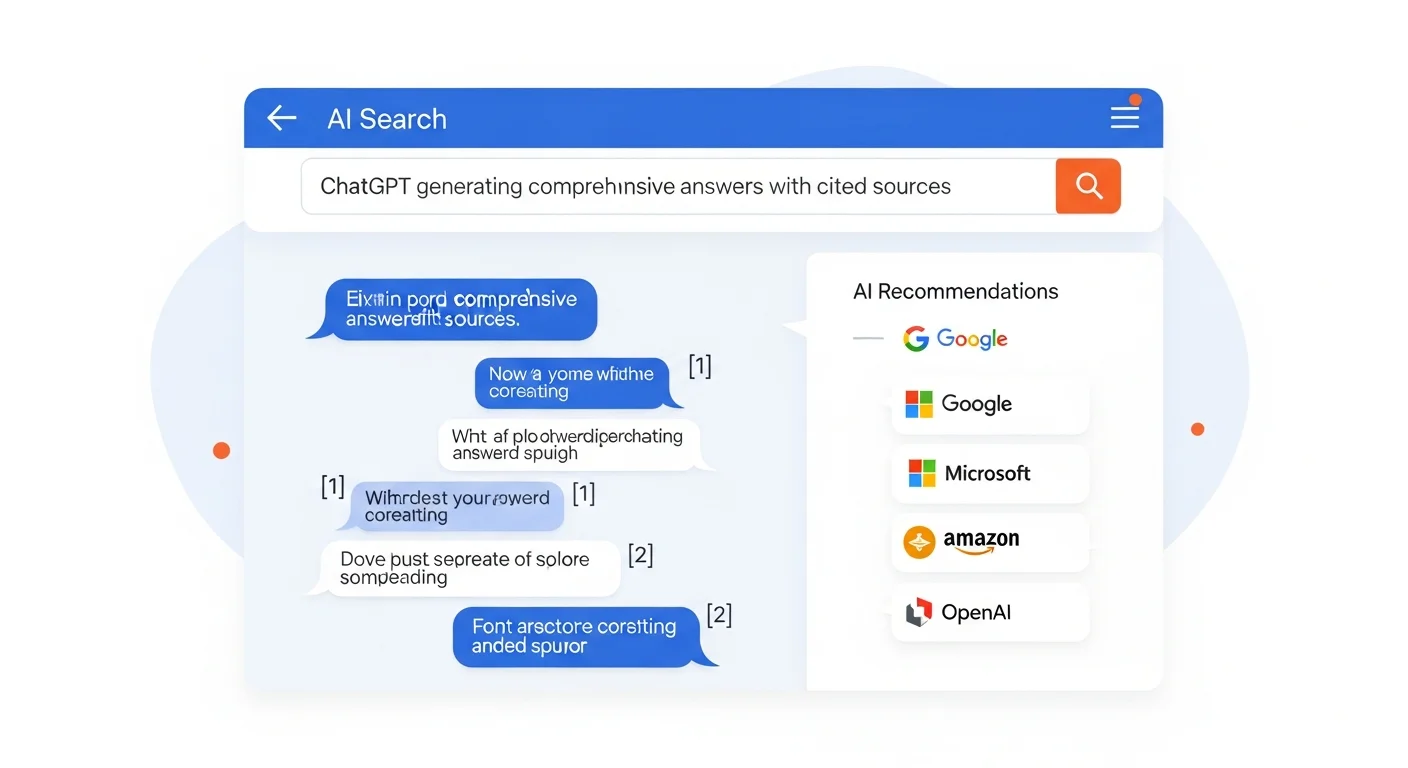
This is something that many teams overlook:AI has a "reference consensus" mechanism. The more authoritative sources a brand appears in, the more AI tends to list it as a recommended answer. This is similar to SEO's "external link weight" logic, but it puts more emphasis on the authority of the source rather than the quantity.
An efficient mention channel for global expansion brands
Industry media submissions: 36Kr global expansion, Huxiu, Forbes English version, TechCrunch. Not for traffic, but for endorsement from authoritative sources. One story cited by 36Kr has a much greater impact on AI citations than 10 blog posts you published yourself.
Podcasts and Video Interviews: The key point is to organize the conversation into a transcript and upload it to the official website. AI cannot process audio and video directly, but text versions of content will be crawled.
Industry report citations: Proactively provide data to industry media. For example, if you have first-hand data on "cross-border e-commerce Q1 advertising cost growth", industry media need this kind of data. If you provide the data in exchange for brand mention, this is the lowest-cost authoritative endorsement.
Partners endorse each other: Google Partner(Verification link), Meta Pro Partner, Microsoft Partner, TikTok Preferred Agency, LinkedIn Marketing Partner and other official certification pages will list partner agencies, which are high-weighted brand mentions. The number of agents certified by the five major platforms at the same time does not exceed 10% in the industry. This scarcity itself is a strong signal. Ensure that such information is current and complete.
Key principles:Don't pursue quantity, pursue quality from authoritative sources. 5 high-quality mentions are far better than 50 low-quality directory inclusions.
If you want to learn more about the relationship between brand mentions and global expansion overall marketing, you can refer to ourBrand global expansion marketing strategy omni-channel guide.
Step 4: Optimize "structured data"
The role of Schema Markup in GEO
Schema Markup (structured data markup) was originally a technology that helped Google understand web content more accurately. But in the context of GEO, it is equally important, as it helps AI identify your brand information more accurately and reduce misunderstandings and missing information.
Think of it as: attach "machine-readable labels" to your web pages and directly tell the AI "this is the company name" "this is the product category" and "this is the contact information" instead of letting the AI guess.
Three Schema that global expansion enterprises must configure
Organization Schema(Basic company information): This is the highest priority. Include company name, logo URL, official website link, contact information, social media homepage links (LinkedIn, Twitter/X, etc.). This Schema directly affects the accuracy of AI's recognition of your brand identity.
FAQPage Schema(FAQ): This is the most direct way to improve the citation probability of AI. Configuring FAQPage Schema on the "Frequently Asked Questions" page of your official website is equivalent to directly feeding the "question-answer" pairs to AI, which greatly increases the probability of being cited. It is recommended that each service page be configured with 5-10 FAQs.
Article Schema(Blog post): Contains author information, publication time, and article topic tags. This can enhance the credibility signal of the content and give AI more "source proof" when citing.
No need to be able to write code
Use GoogleStructured data markup toolsStandard JSON-LD code can be generated and copied and pasted into the corresponding page. < head> Just in the tag. Most WordPress themes or Webflow sites support direct insertion.
After the configuration is completed, use the same tool to check whether it is effective. After confirming that no errors are reported, it is basically completed.
Step 5: Track "AI Citation Rate"
Why traditional SEO tools aren't enough
Google Analytics 4 (GA4) and Google Search Console (GSC) are standard tools for SEO, but they cannot see the traffic brought by AI search. When a user sees your brand in ChatGPT and then directly searches for your brand name to enter the official website, GA4 will classify this traffic as "direct traffic" or "brand word search", and you have no idea that the source behind it is AI recommendation.
This is a common blind spot faced by all global expansion companies currently.
Manual tracking method (suitable for teams just starting out)
Without professional tools, you can still track it using the following method:
- Create a keyword list: Sort out the 10-15 industry questions that you most hope to be recommended by AI (such as "Recommend a cross-border e-commerce SEO service", "How do global expansion B2B companies choose marketing agents")
- Regular weekly searches: Search these keywords on the three platforms of ChatGPT, Perplexity, and Gemini respectively.
- Record occurrences: Whether the brand name appears, in which paragraph it appears, and whether there is a link attached
- Create an Excel tracking sheet: Record each search result and observe the monthly change trend
The limitations of this method are that it is manual, time-consuming, and has limited platform coverage. But for teams that are just starting to do GEO, it can help you establish baseline data and know where you are starting from.
SeaSeek's professional tracking solution
What we offer our customers GEO optimization servicesIt includes an exclusive citation rate tracking system that automatically monitors brand citations on 47 AI platforms (including ChatGPT, Perplexity, Gemini, Claude, Copilot and various vertical AI tools), generates citation rate reports every week, and accurately tracks the brand's AI visibility changes in different scenarios.
Mini-story: tracking data to help raise funds
A cross-border e-commerce team began to systematically track their brand citation rate on Perplexity in mid-2025. Three months of tracking data show that their citation rate for words related to "cross-border e-commerce product selection tool" increased from 0% to 18%, while the citation rate of major competing products fell from 12% to 7% during the same period.
This set of data eventually became one of their core indicators for showing "brand equity value" to investors. Today, when advertising ROAS is becoming increasingly difficult to tell stories, "AI search visibility" has become a new brand moat indicator.
How do GEO and SEO work together (don't choose one or the other)
A team asked us: "Which one does GEO or SEO?"
The real question is:This question itself is the wrong question. GEO is not a substitute for SEO. The two feed each other, forming a "double helix" relationship.
The authoritative content accumulated by SEO will become the source of training data for AI. Your high-quality blog posts, widely cited guides, and sound technical SEO foundation are all the basis for AI to identify you as "authoritative."
In turn, GEO's increased brand visibility will lead to more brand word searches. When more users see you in the AI tool and actively search for your brand name, the number of brand word searches increases. This is an important signal for the Google algorithm to determine brand authority, which will feed back your SEO ranking.
This is the growth flywheel:Good content (SEO) → AI citations (GEO) → Increased brand searches → Enhanced authority → More content is cited.
Practical suggestions:Lay the foundation of SEO first, then add GEO optimization. If the technical SEO is problematic (pages load slowly, structure is disorganized, content is weak), the AI will not reference your brand. SEO is the foundation and GEO is the building built on the foundation.
If you haven't systematically sorted out the overall layout of global expansion marketing,Brand global expansion marketing strategy omni-channel guideis a good starting point.
Conclusion: GEO optimization is brand asset building, not a one-time project
Review these 5 steps:
- Establish brand knowledge anchors,, Let AI clearly identify who you are
- Produce AI-friendly content,, Let AI have high-quality answers that can be cited
- Expand brand mentions,, Establish "citation consensus" through authoritative sources
- Optimize structured data,, Reinforce brand messaging in a machine-readable way
- Track AI citations,, Use data to drive continuous optimization
The key is:GEO optimization is not a one-time technical configuration, but a continuous brand asset construction. ChatGPT's model will continue to be updated, new AI platforms will continue to emerge, and the brand authority established today needs to be continuously maintained and strengthened.
A global expansion B2B company (supply chain management SaaS serving the North American manufacturing industry) will begin to systematically implement these 5 steps in Q2 of 2025. Six months later, they were completely invisible from AI searches and became the top brand for vertical keywords related to "supply chain management SaaS Chinese brand". Feedback from their sales team: 22% of customers in their inquiries mentioned "I saw you while searching for AI tools," which is a source of customer acquisition they have never had before.
if you want to knowHow to get ChatGPT to recommend your brandAnd systematically plan GEO optimization strategies, welcome to view our GEO optimization services, orMake an appointment for consultation, talk to us about your brand's current situation and goals.
This article is written by SeaSeek SEO team. SeaSeek is an AI-native overseas marketing expert that has been officially certified by the five major global advertising platforms: Google, Meta, TikTok, Microsoft, and LinkedIn. It owns 11 national software copyrights and has served 500+ global expansion companies. For basic SEO services, please visitSeaSeek SEO service page.